
Bitaugan: The Island Surrounded by Whirlpools
They said Mindanao's whirlpools were worse than Matnog. So I climbed into a small boat and rode straight into them. Of every dangerous place I've taken you, Bitaugan is the only one where my knees actually shook.
FEATURED STORIES
6/30/20267 min read
Bitaugan: The Island Surrounded by Whirlpools
A first-person account from Bitaugan, an island under Surigao City, where the sea spins hard enough to pull in a boat — and where, strangely, a "miraculous stone" sits on a chapel altar.
By Joseph Pasalo
I have stood at the edge of a lot of dangerous places for this channel. I have driven roads cut into the side of mountains and crossed water that turned my stomach. But until I climbed into a small yellow boat in Surigao City, I had never felt my own knees shake.
This is the story of how I got to Bitaugan.
It started the way many of our trips do — with a comment online. A few months back, we posted a clip taken in the Matnog sea, and the messages poured in. People kept telling us the same thing: if you think that water is rough, you should see the sea here in Mindanao. They were pointing us to Bitaugan. So we packed up and went to see it for ourselves.
Watch the video

At the top of Mindanao
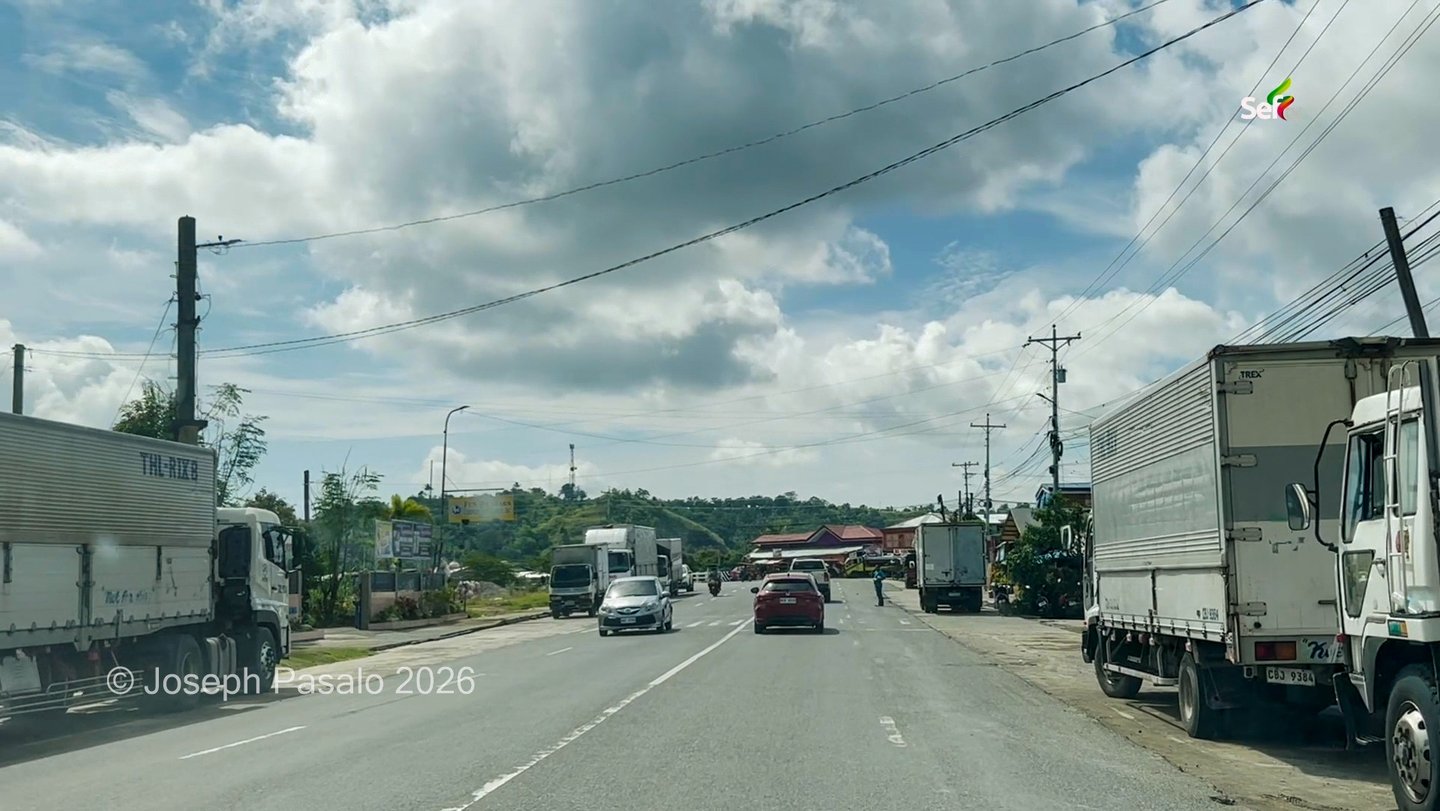
The first surprise had nothing to do with the water. Driving into Surigao City, I kept thinking about how many people picture this part of the country — far away, behind on development, maybe even unsafe. Then you set foot here and the roads open up clean and wide in front of you, the coastline curving all the way from the mountains behind the city to the harbor on the other side. It is the kind of place that quietly changes a person's mind. I understand now why so many people fall in love with Mindanao and decide to stay.
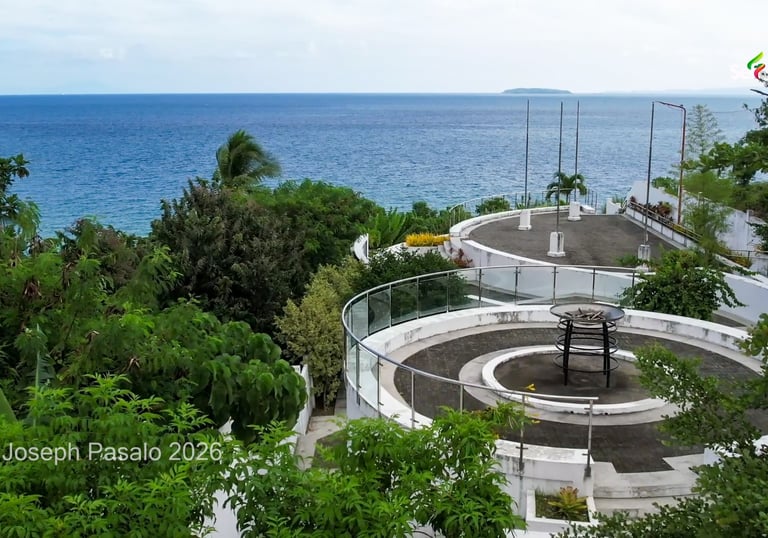
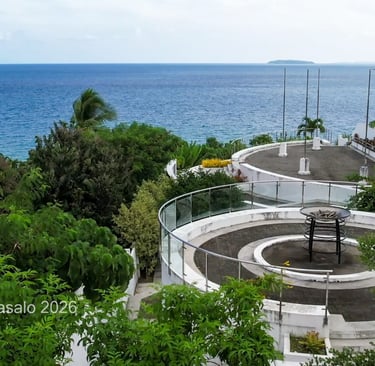
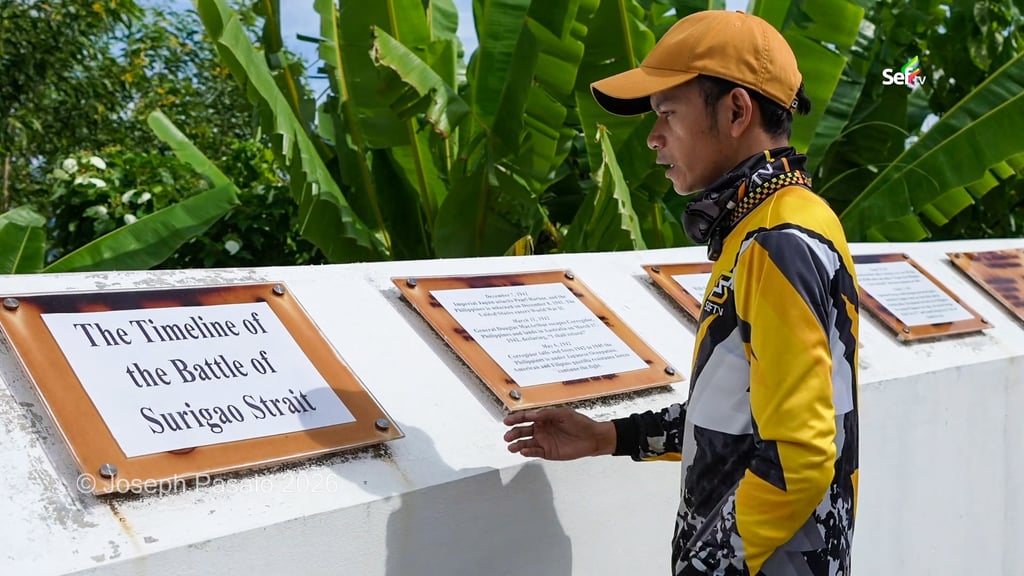
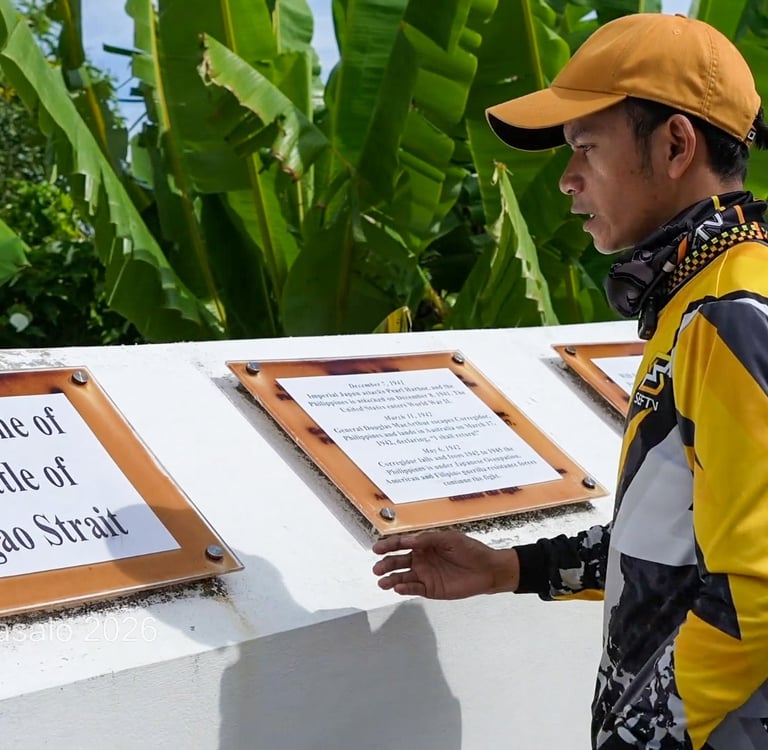
We are near the very top of Mindanao here, the northern tip, the point where you can look across and see the farthest islands of the Visayas. Along the road, I stopped at the Battle of Surigao Strait monument. Layer by layer, it lays out a timeline of what happened in these waters during the Second World War — the destroyers, the battleships, the names of everyone caught up in the fighting. If you ever pass through Surigao City, stop and read it. It explains why a monument like that stands here at all.
There was one small thing I could not stop looking at on the way to the boat: a foreign flag hanging from a house right at the edge of the sea. For a second it played a trick on me. But no — we had not crossed into another country. We were still home, just standing at the far edge of it.
The crossing
We had planned to launch from Day-asan, the floating village we featured a few years ago, where rows of houses sit right on the surface of the water and somehow stay spotless. But the map pointed us instead to barangay Balibayon, where there was good space to park the car. So that is where we met our boatman, Sir Rolando, and the yellow boat that would carry us across.
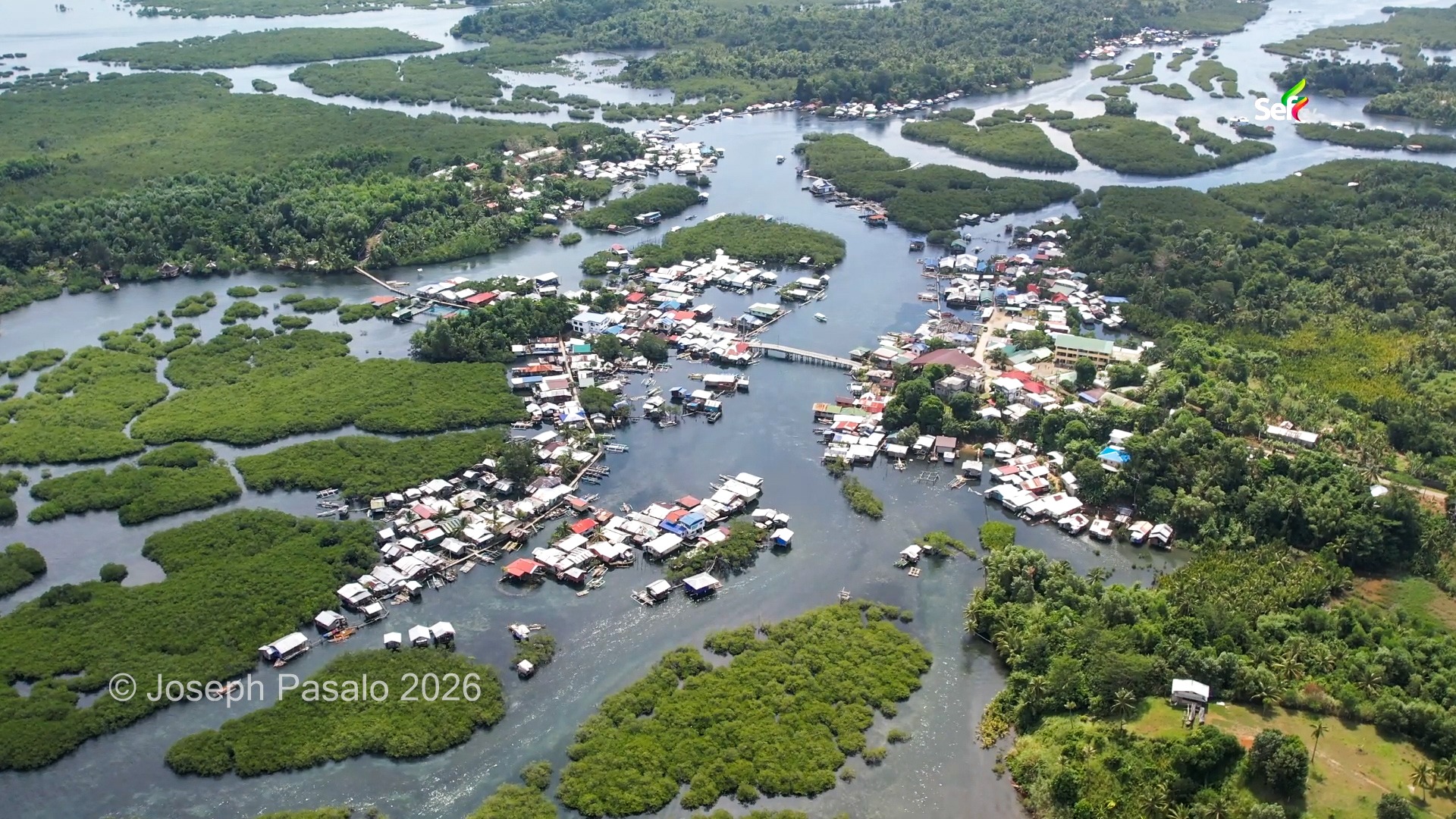
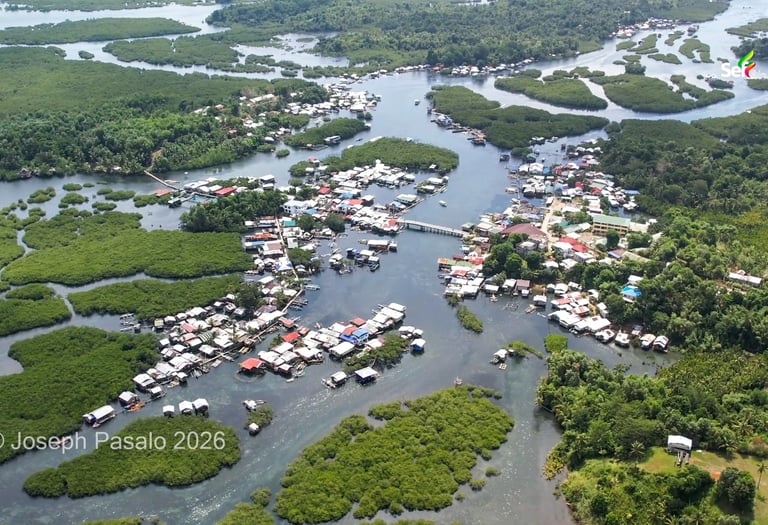
I noticed the outriggers right away. Instead of the bamboo you usually see holding up a boat, his were stainless steel — far stronger, and clearly chosen for a reason. Bitaugan was about half an hour out, Sir Rolando said. To get there safely, we would not cut straight across the open sea. We would slip through the channel at Day-asan and come out the other side, keeping our distance from the worst of the whirlpools.
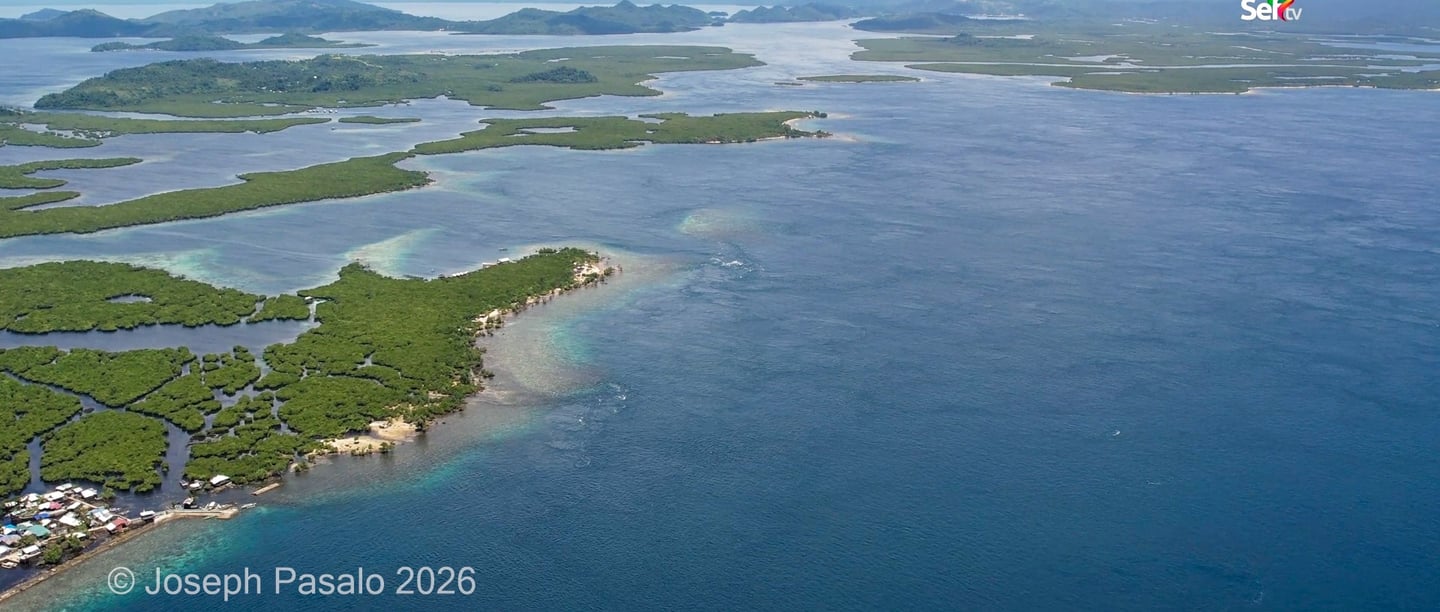
We barely got moving before I felt the current grab at the boat. Then we reached the part of the sea I will not forget. All around us, the water was spinning. You could read it plainly: flat patches where the water was being pushed up and out, and wavy patches right beside them where it was being pulled down and sucked in. Our boat sat in the middle of it, getting tugged toward the center.
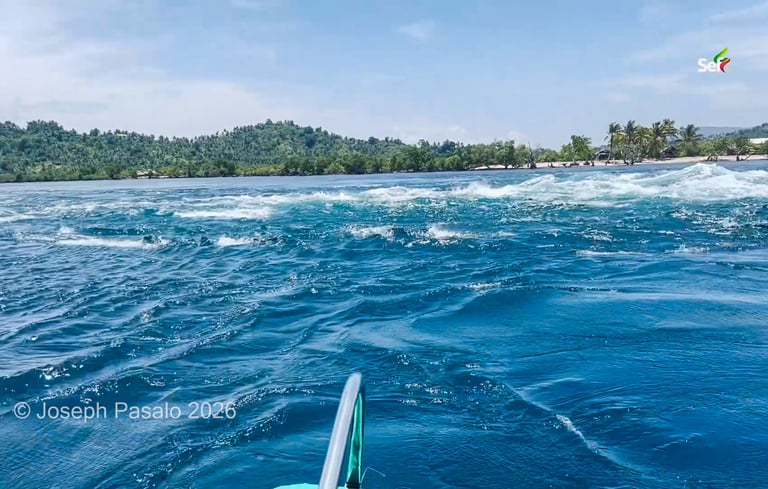
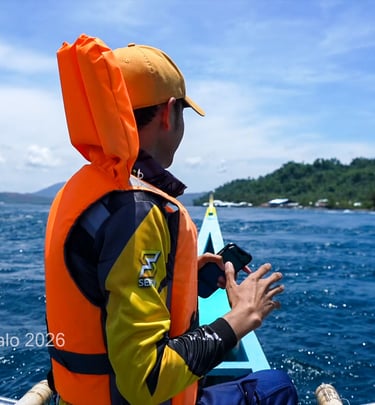
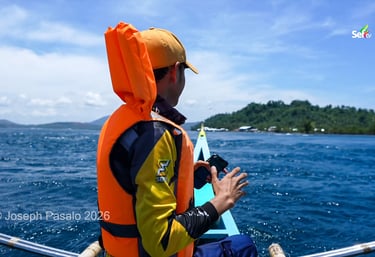
It was not a little scary. It was terrible. I had honestly expected to reach the village first and then be shown the whirlpools from somewhere safe. Instead they met us on the way in, one after another, the water swirling on every side. The locals had warned us that this was the most dangerous time to cross. From that hour, the tide would keep dropping until late afternoon, and the lower the water, the harder the whirlpools spin.
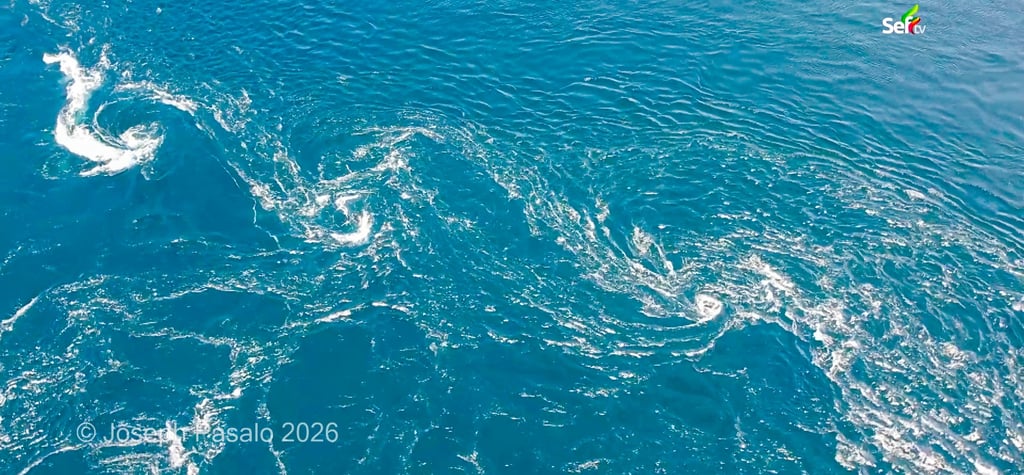
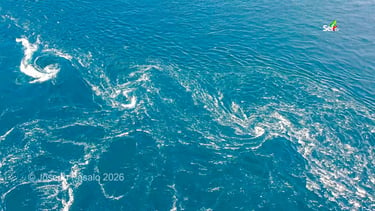
The strangest part is that the wind was calm and the waves were small. And yet the boats tied up at the port were shaking. Sir Rolando explained why. The water here does not come from one direction. It pushes in from the open sea on one side, and from the mangroves and the sea beyond them on the other. Where those different currents meet, they twist against each other and spin. During low tide the channel pinches even tighter, the same amount of water forced through a smaller gap, and the spinning grows stronger. The whirlpools are at their worst around the full moon and the new moon, when the moon pulls hardest on the tide. Some months are rougher than others — often June, and usually December.
The stories the sea leaves behind
Sir Rolando told me about children who once drifted out here, riding the styrofoam floats fishermen use, not realizing the anchor rope tied to them was being dragged by the current. Their parents reached them just in time. He told me about his godfather, too, who had gone out for abalone and was on his way home when his boat lost its balance and capsized. The waves carried him down into a whirlpool. He ended up at the very bottom of it — and he swears he could still breathe down there, in a pocket of air right in the middle of the spinning water. That is the kind of place this is.
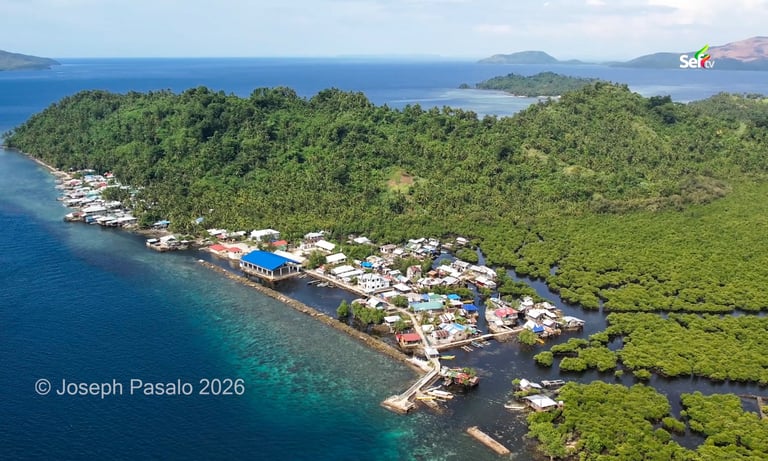
When we finally reached Bitaugan, the island opened up wider than I expected, with a cluster of houses along the shore. From there we could see Nonoc Island and barangay Talisay across the way, and the huge ships used for mining sitting out on the water. Two barangays live out here on the edge of this dangerous sea, both still under Surigao City.
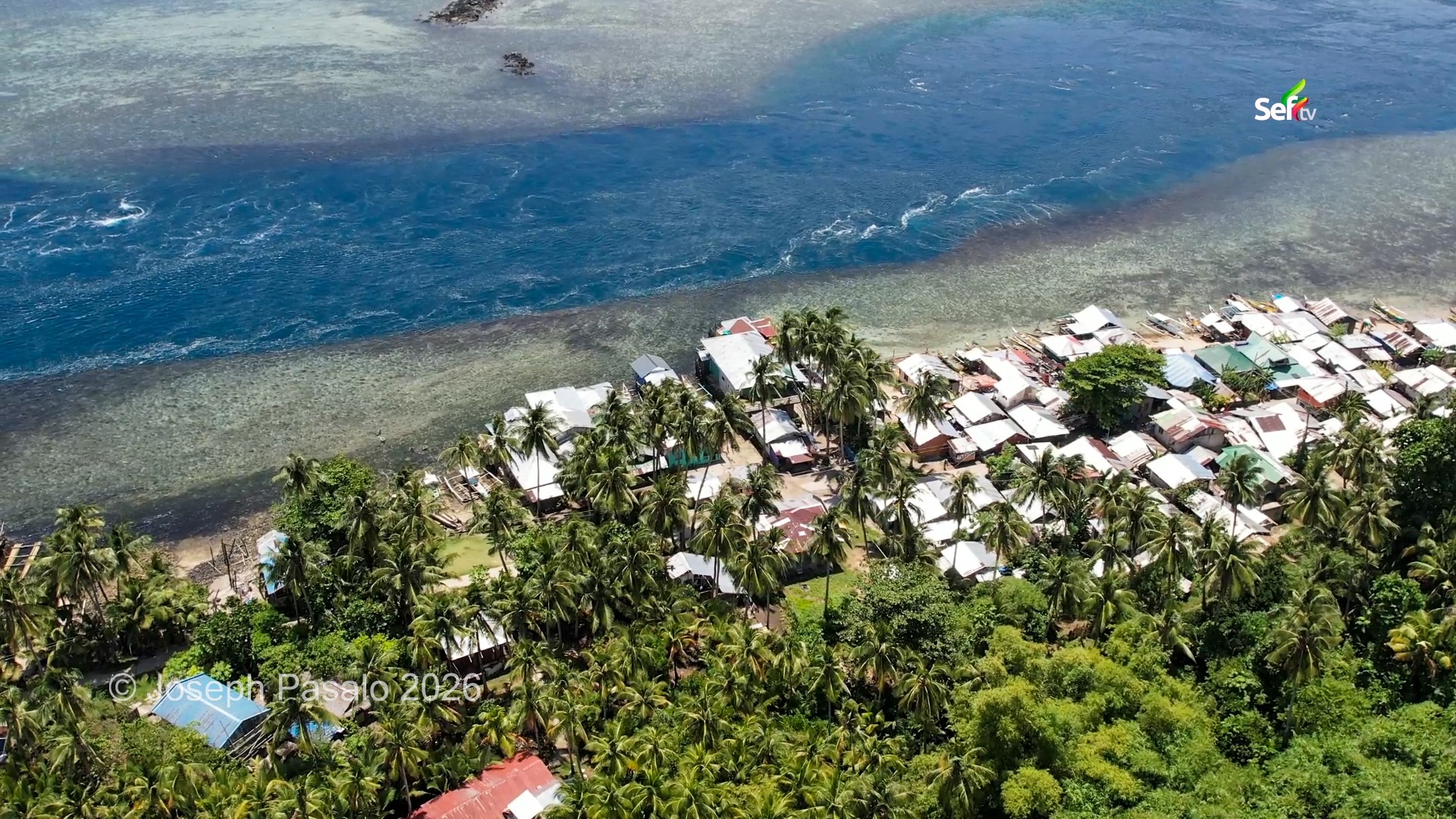
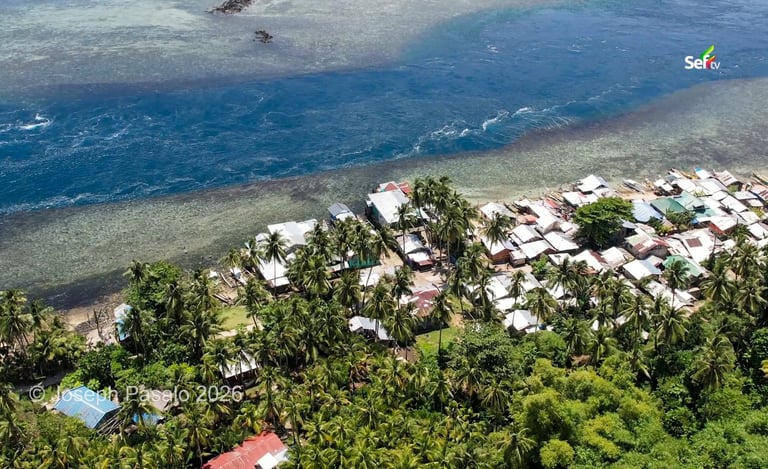
Life on the island runs to its own rhythm. The roads are good — wide enough for four-wheeled vehicles — yet there are only three motorbikes and not a single car. The motorbikes do the real work, hauling goods up from the boats that dock with supplies. Electricity reaches them all the way from the mainland, the line carried on poles through the shallows and across the neighboring islands. The fishermen wait out the daytime and head out at night, when the sea finally calms and the whirlpools go weak enough to dive.
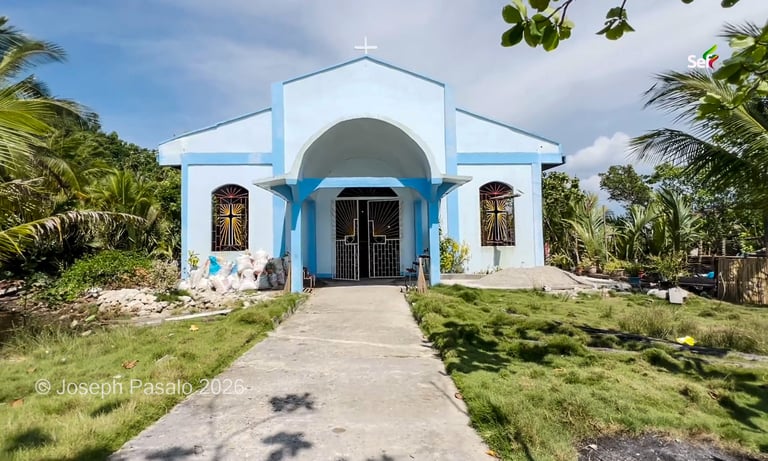
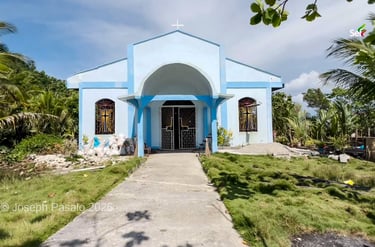
Inside a small chapel on the island, I found the last thing I expected. Beside the usual cross, the Nazarene, the Santo Niño and the saints, there was a stone sitting on the altar — a stone the locals call miraculous. The story goes that someone once treated it as an ordinary rock and hurt their foot badly because of it. Then they dreamed about it, and so it was placed in the church. They say it keeps growing — it used to be small, and now it is long, getting bigger each season, until it no longer fits in the procession every year. It is brought out during the festival, sometimes when someone dreams of it, and during the feast of San Juan, carried from the pier to the far end of the island. Near it stands a church of a faith I had not seen before — the Iglesia ng Bathalang Buhay, neither Catholic nor Iglesia ni Cristo, but something of its own.
Why nobody talks about it
Bitaugan sits surrounded by famous neighbors — Siargao, Dinagat, all those islands with white sand that everyone knows by name. Next to them, Bitaugan was never the place people talked about. It only entered the conversation when word got out about the giant whirlpools ringing the island, and how dangerous the sea is just to reach it. Suddenly it was on the lips of the boatmen and the crews of the ships that pass through.
You can never quite call the water here safe. The whirlpools appear when they want to, strongest under a full moon. On the way back, Sir Rolando told me it was a good time to return — far calmer than when we had come in. I believed him. You saw the crossing in the video. The way that sea moved was genuinely frightening.
Of all the dangerous places I have taken you to, this is the only one where my knees shook — right there in the middle of the big whirlpool, with the boat tilting toward the center and that feeling that the water was about to swallow us whole. If it had pulled us in, there would have been no fighting it.
But we made it across. And Bitaugan, the island the sea keeps trying to guard, turned out to be worth every shaking step.