
Deadly but Calm: Inside the Philippines' Snake Island
Off Silago, Southern Leyte sits a rock most Filipinos have never heard of — home to hundreds of venomous sea snakes. They call it Snake Island, and I walked right through it. Here's what it was like.
FEATURED STORIES
Joseph P.
6/29/20266 min read
One Bite, Eight Hours:
Welcome to Snake Island, the Deadliest Rock in the Philippines
Watch the video

On a bare rock off Silago, Southern Leyte, hundreds of venomous sea snakes rest in the sun. This is what it's really like to set foot on the place people simply call Snake Island.
When I left Palo, Leyte that morning, I already knew how the day would end — on a small rock in the middle of the sea, standing a few steps away from some of the most venomous snakes in the country. What I did not expect, even after all this time, was how calm the place would feel.
This was not my first visit. I had been to the island before, and the snakes were the reason it stayed in my mind. But this time I wanted to do more than stare at them. I wanted to show the town that keeps them, and this quiet side of Southern Leyte that most travelers still drive straight past.
By Joseph Pasalo
A hill, a view, and a very clean town
The ride from Palo took a little over an hour and a half. The road kept opening up as we went — wide and easy, even with plenty of vehicles passing by. Our first stop was Hulyana's Hill, a hilltop spot in Silago that riders and tourists love to drop by.
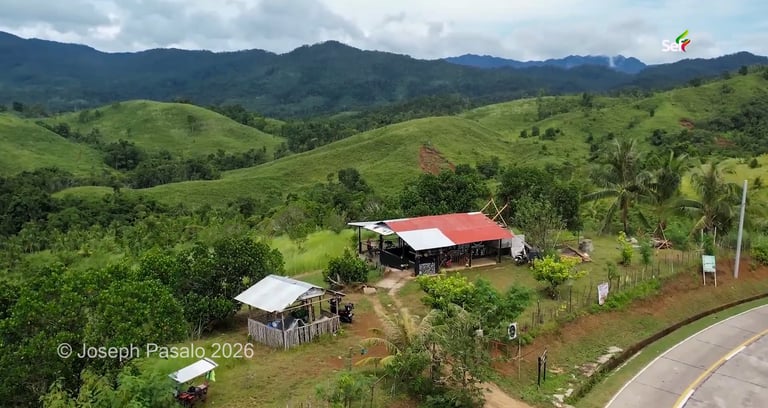
The road up is narrow, so the parking is at the very top of the hill. From up there, the reason people come is easy to see. Jackfruit trees stand here and there, and concrete seats line the slope where you can rest, take photos, and simply look at the view. Riders who pass through leave their stickers behind, like small marks that say "I was here." The bestseller, I was told, is pizza, and you can eat while the whole coast sits right in front of you.
What I like most about Silago is how clean it is. The town is neat, orderly, and peaceful — the kind of place that makes you slow down on purpose.
The crossing
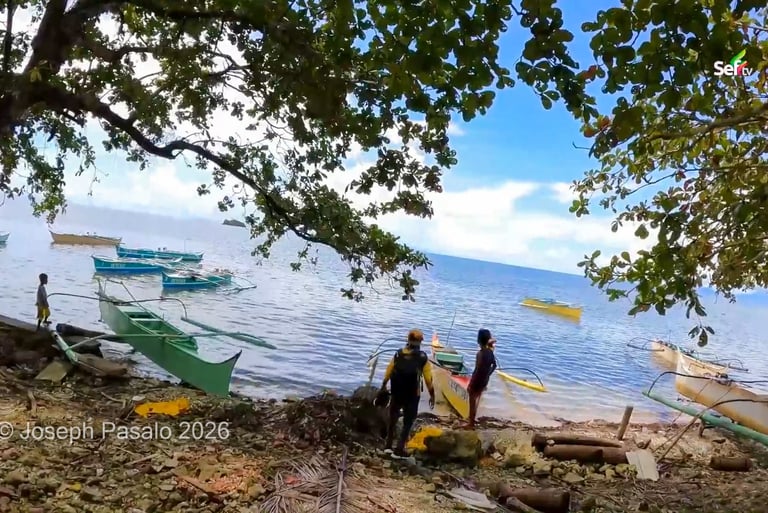
From Hulyana's Hill it was another twenty minutes to the shore where the boats wait. We arrived just as a few residents were holding a meeting by the water. Our boatmen for the day were Natsi and Ariel.
The first thing I asked was whether the sea was rough. It wasn't, and that matters here. The island we were heading to is one big rock, and when the water turns wild, the waves slam hard against it and there is no safe place to land. That morning the sea was calm, so docking would be easy.
The ride was only about five minutes — the rock sits that close to shore. Even without diving, I could see straight down to the bottom. The water was that clear.
A rock full of snakes
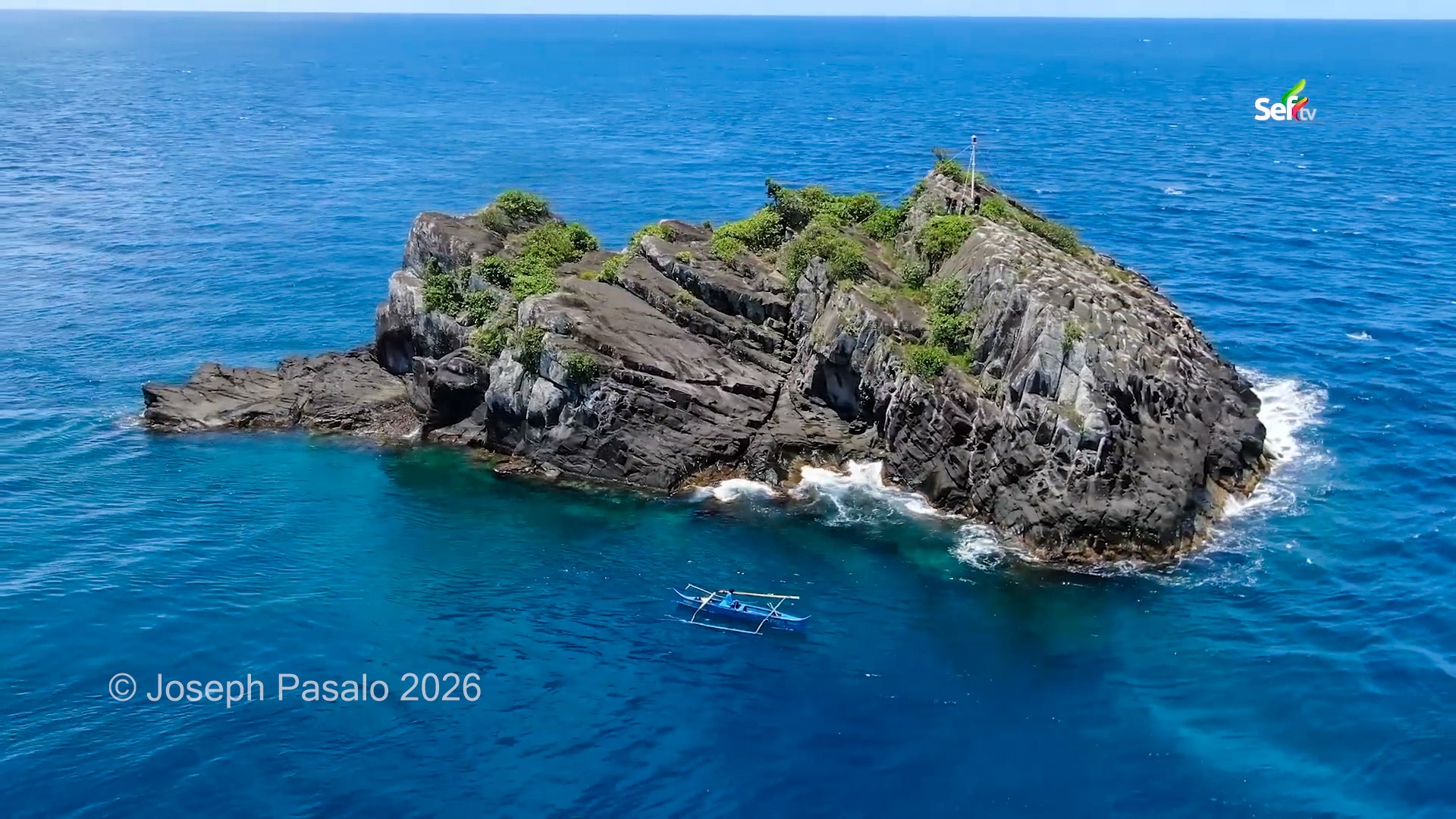
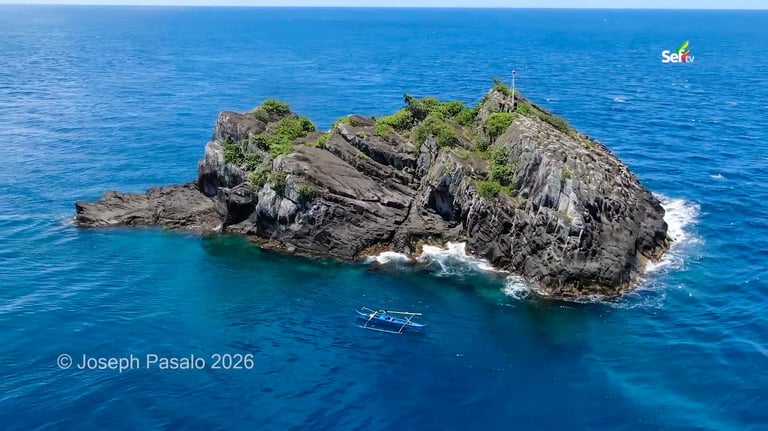
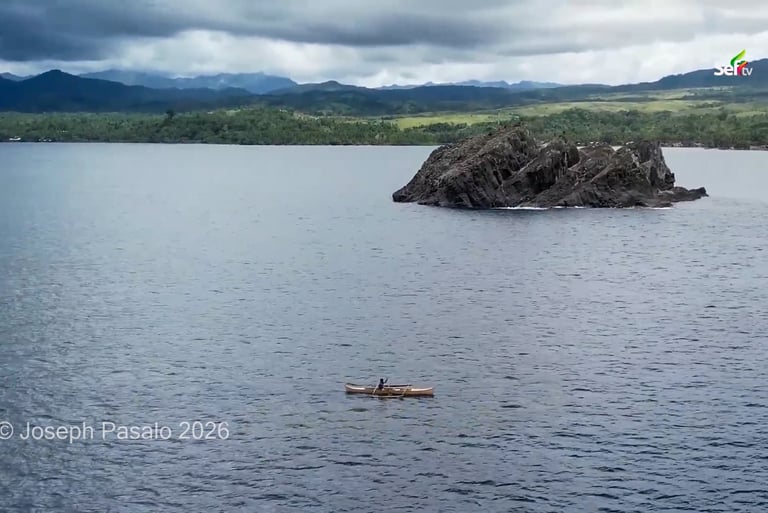
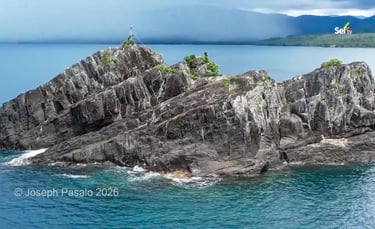
The island is called Pelada Rock, though the people here know it better as Batong Dako. Many simply call it Snake Island, and once you arrive, you understand why.
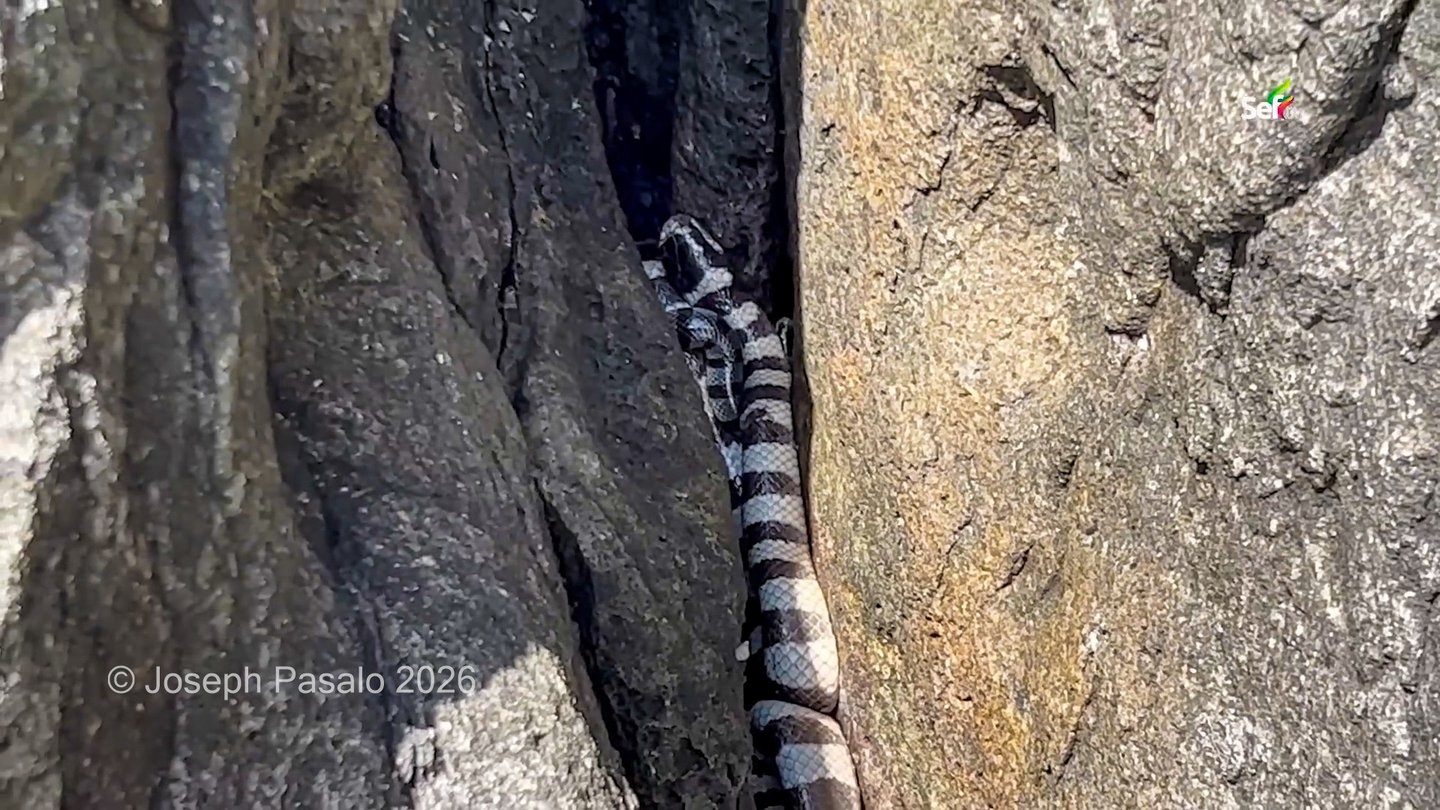
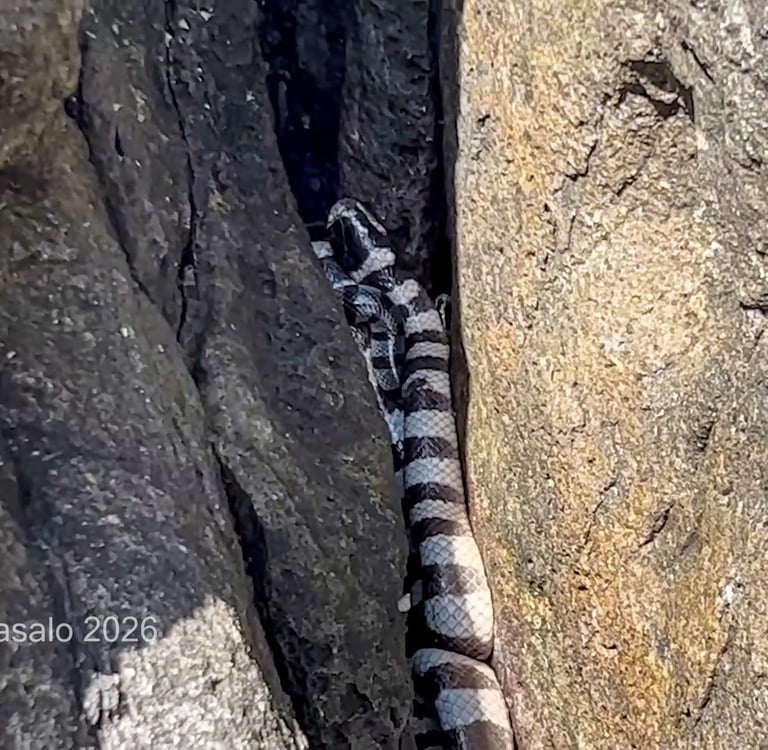
We circled it first to check the conditions. Along the sides of the rock, the water was so clear you could read its depth at a glance. Then I looked into the cracks and corners of the stone — and there they were. Snakes, piled into the gaps, some oversized, some small, resting in the heat of the day.
They are not aggressive. You can come close, but you must never harm them. Under the strong sun they stay put on the rock; when night falls, they slip into the water to hunt. Around them grow tough little plants, the kind you usually find on high mountains or rocky islets, and these give shelter to birds. Beneath the giant stones and along the branches, the birds build their nests — hidden and safe from the pounding waves and the wind.
Walking here, you learn to watch your feet twice. The rocks are sharp, and a snake's tail sometimes hangs loose from a gap while the rest of its body stays tucked inside. One careless step is all it takes.
Near the top stands a small solar-powered light, a mini lighthouse that guides the fishermen. And the view from up there is something else. You can see exactly why there is still no direct road linking the Pacific towns of Southern Leyte to the rest of the province. The mountains are simply too tall and too many. For now, drivers take the long way — from Abuyog to Silago, then around the Pacific towns before finally reaching Sogod. A direct road would help so much, especially for goods that cannot wait, like the day's catch of fish.
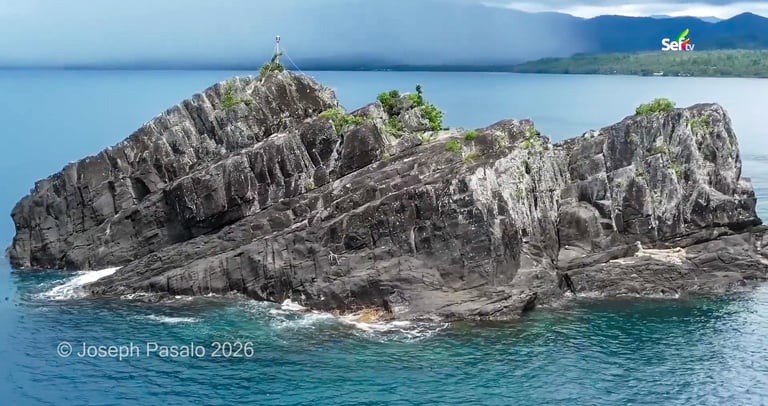
From the rock you can also see Dinagat Province and Hibusong Island toward Surigao, and the part of Southern Leyte near San Ricardo and Liloan — the gateway our countrymen use to cross to Mindanao. Some braver tourists, I'm told, like to climb the rock and jump straight into the sea.
The snake they call walo-walo
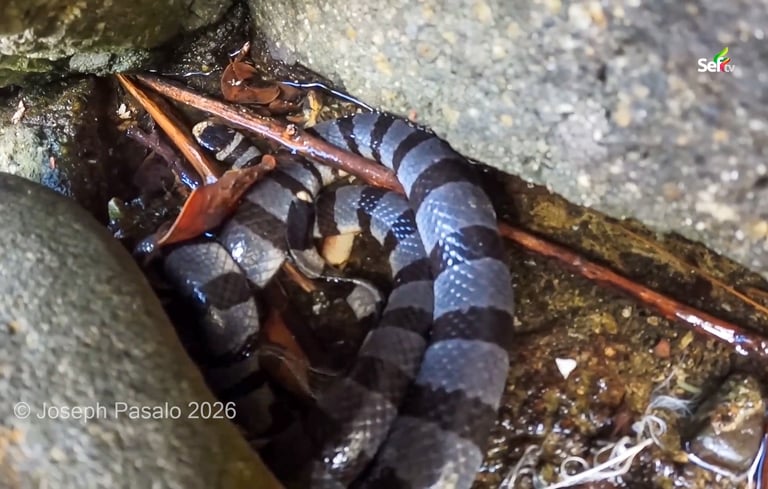
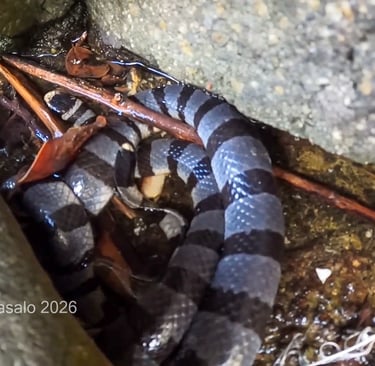
The creatures resting in those gaps are sea snakes — counted among the most venomous in the Philippines. They are not aggressive, yet they are still called the most dangerous snake in the country, and the reason is their venom.
Here in the Visayas, people call it tigwawo. Across the country, many know it by another name: walo-walo, from the word for "eight." Old belief says a person bitten could die in eight — eight seconds, eight minutes, or eight hours. It is the banded sea krait, easy to spot by the dark bands across its pale body. A GMA News report once explained that its venom is said to be many times stronger than a rattlesnake's. And yet, for all that fear, actual bites are very rare. The snake would rather be left alone.
That is the strange truth of Snake Island. It holds one of the deadliest animals in the country, and still it feels at peace — a sleepy rock of resting snakes, nesting birds, and clear blue water.
A sanctuary next door
Back on the boat, it was only twenty minutes to our next stop: the Calag-itan Fish Sanctuary in Hinunangan, Southern Leyte.
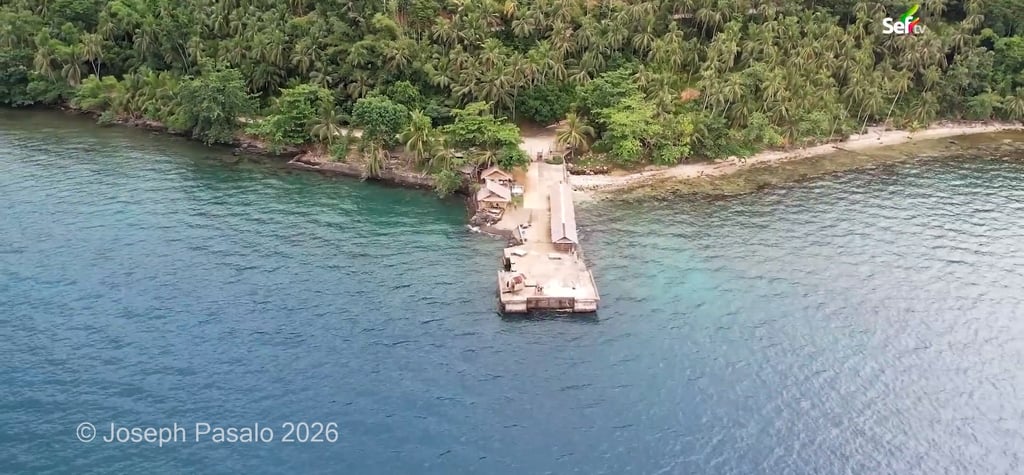
The entrance fee is easy on the pocket — ten pesos for adults, five for kids. The rules are clear and posted at the gate: no dynamite fishing, no spearfishing, no trolling, no nets. Hunting sea creatures of any kind is not allowed here. There are life vests for those who want to swim, and the favorite activity is feeding the fish. If you didn't bring food, you can buy bread for twenty pesos a wrap, baked right in Hinunangan proper.
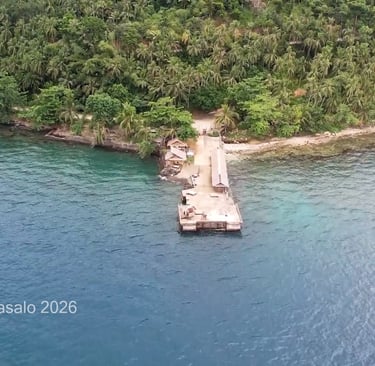
The water is full of life — parrotfish, yellowtail fusilier, and striped ones too. They are the kind you could eat anywhere else, but not here; this is a sanctuary, so they are left to thrive. Cottages line the shore for visitors who want shade and a meal, and a long pier lets you feed the fish from one end to the other. The town proper is just five minutes away.
Worth the long ride
By the time we packed up, we had seen two of Southern Leyte's proudest spots in a single day — Snake Island off Silago, and the Calag-itan Fish Sanctuary of Hinunangan. Two places that show how much this part of the country still has to offer, if only more people knew to look.
I came for the snakes, the way I did the first time. I left thinking about the quiet — the clean little town, the calm sea, the birds in the rocks, and the deadly creatures that, in the end, only wanted to rest in the sun. I'll be back. There are more places like this waiting, and I can't wait to show you.