
Mangsee Island: Inside the Crowded Philippine Island Just 15 KM from Malaysia
Discover Mangsee Island, the Philippines' farthest barangay near Malaysia. Travel vlogger Seftv shares the rough Sulu Sea crossing, giant border markers, Malaysian products, and the welcoming life of 10,000 islanders in Balabac, Palawan.
FEATURED STORIES
Joseph P.
6/12/20267 min read
Life at the Edge: My Journey to Mangsee,
the Crowded Philippine Island Next Door to Malaysia
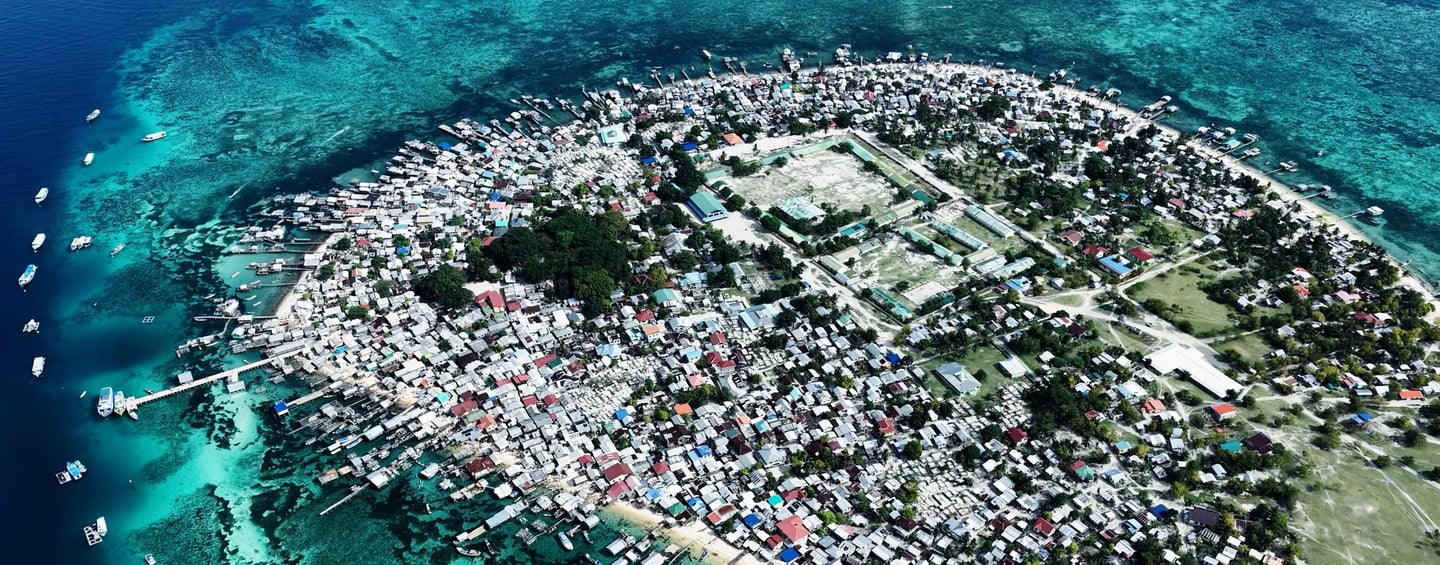
There is a place in the Philippines where your phone greets you with the words "Welcome to Malaysia" — even though you never left the country. That place is Mangsee, a remote island barangay of Balabac, Palawan, sitting right on the border between the two nations. More than ten thousand people live on this small island, most of them Muslim, and some with Malaysian roots.
I went there to see what life is like at the very edge of our map.

A Journey That Was No Joke
Getting to Mangsee tested my patience. The trip took one hour by air, five hours by land, and about six more hours on the water. Before the final crossing, we spent the night in the town center of Balabac, around forty kilometers from the southern tip of mainland Palawan, after a full day of island visits with Isla Malaya Travel and Tours.
Morning in Balabac came quietly. It was past six, but the sky was still a little dark when I stepped out of Julla Lodging House. A few residents were walking around, some were playing at the covered court, and others were still asleep. I wanted coffee, but the restaurants and shops were all still closed.
Watch the video
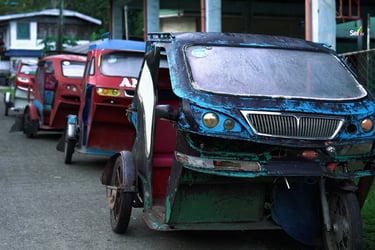
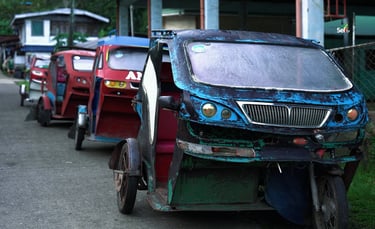
Balabac itself had small surprises. Along the shore, houses gather right on top of the water. The roads are paved, and tricycles serve as the main ride to the populated parts of the island — but these are not ordinary tricycles. They are designed to look like four-wheeled vehicles, complete with headlights, front grilles, windshield wipers, and even brand names like Nissan, Toyota, and Mitsubishi.
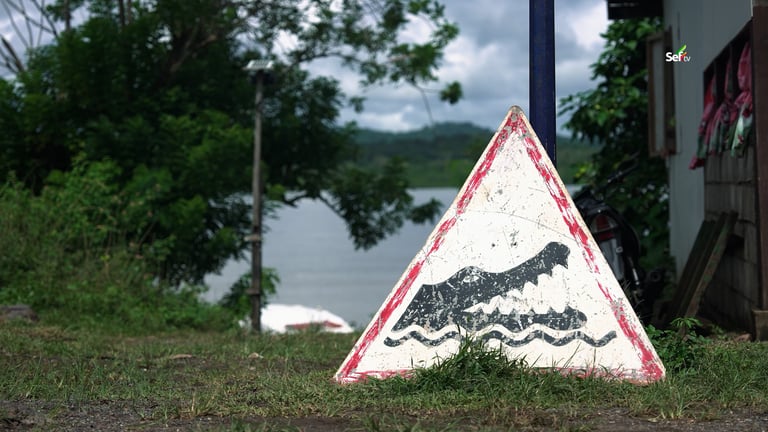
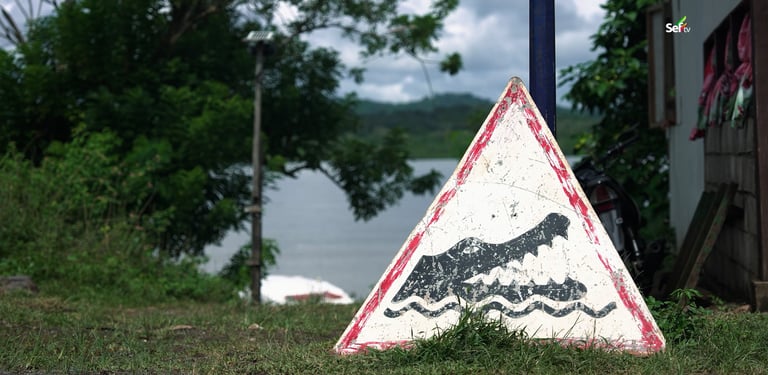
Near the small-boat harbor, a sign caught my eye: swimming is not allowed, because crocodiles are sometimes seen along the water's edge. Beside it hangs a small piece of iron. When someone spots a crocodile nearby, they strike it like a bell to warn everyone in the area.
Crossing to Lumbucan
From the town center, our first stop was Lumbucan Island, about an hour and a half away by boat. I asked our boatman if the sea was always this rough. He said no — sometimes it is very calm, sometimes it is wavy, but what we were riding through that day was normal.
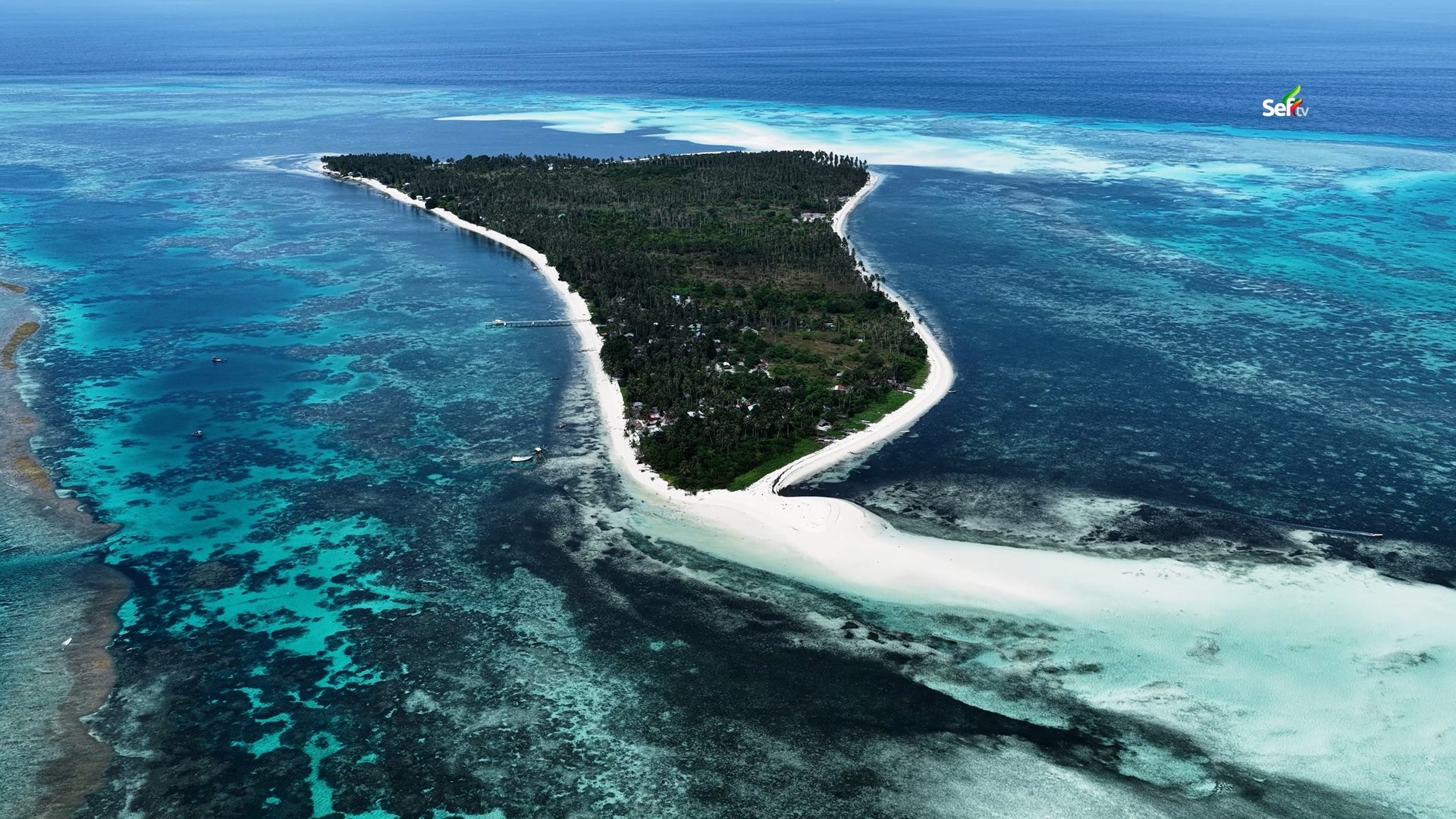
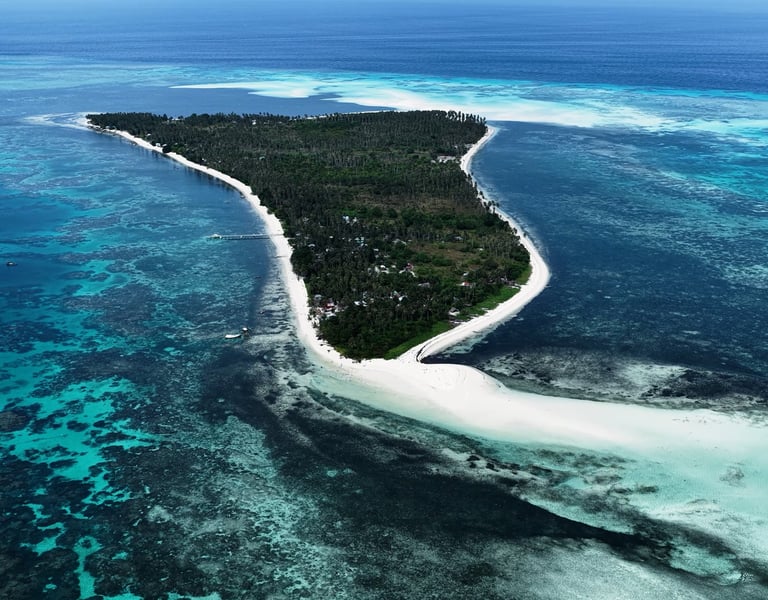
The municipality of Balabac is made up of thirty-six islands, known for beautiful beaches, an amazing sandbar, and rich waters. As we neared Lumbucan, the boat slowed down. The water turned a deep blue, then shallow, with rocks that could damage the propeller, so we crawled gently toward the shore.
Lumbucan welcomed us with children who spoke Tagalog but told me their own language was Ubian. The sand there is so fine it reminded me of cement powder. The houses come in matching colors — an orange roof with orange walls, a blue roof with blue walls — much like the homes I once saw on Panguan Island.
What touched me most was their way of sharing. I saw fish laid out and asked if it was for sale. It was not. When someone catches something, they give part of it to relatives and neighbors. That old custom is still alive there. They even offered us snacks — wafers with labels we could no longer read, because the products came from Malaysia. Although Lumbucan sits closer to the Balabac mainland, it actually falls under barangay Mangsee, which was still more than an hour away by speedboat.
The Rough Road to the Border
For the next leg, we switched to a smaller traditional boat with no outriggers. It looked less stable, but locals say it is faster and better at handling the high waves common in that part of the sea.
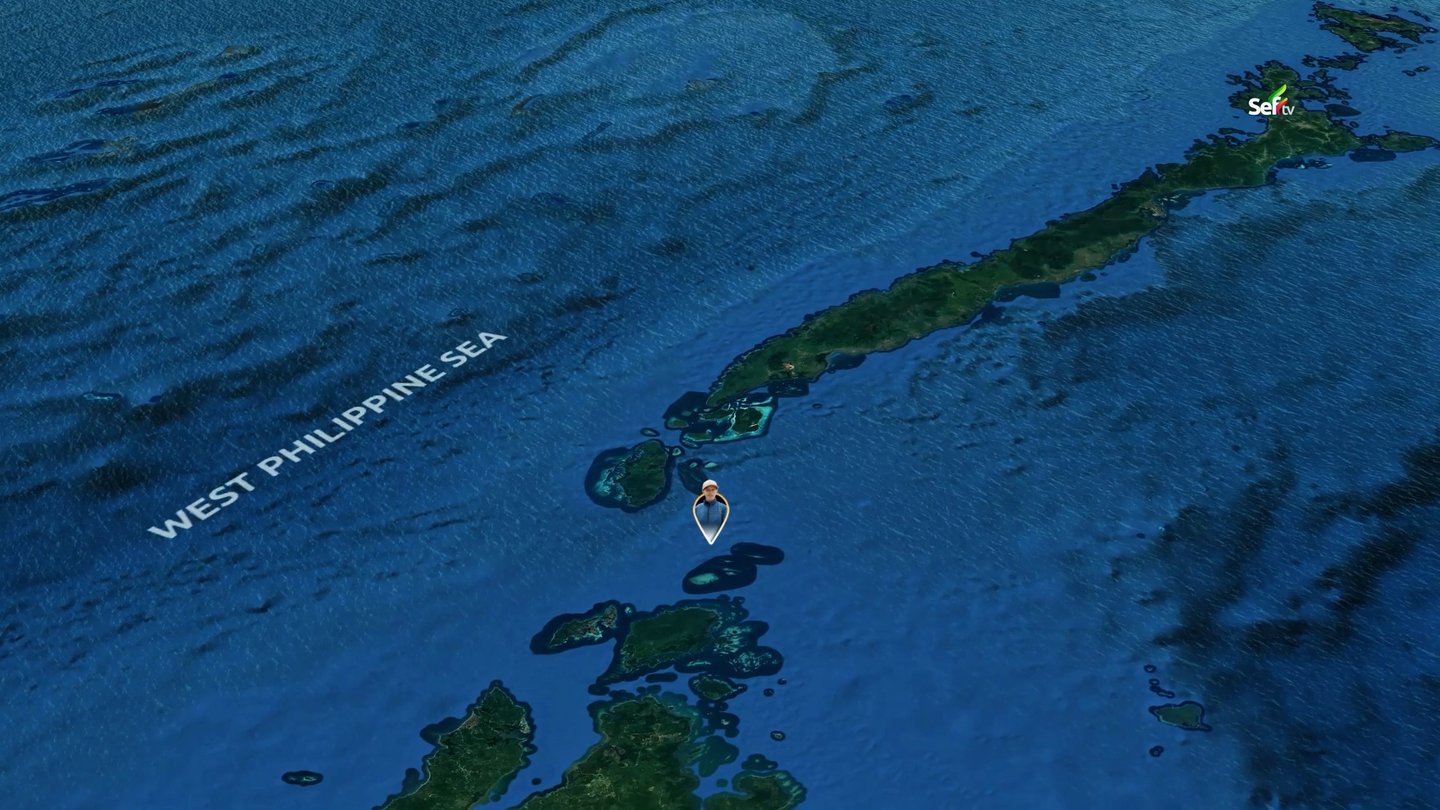
This stretch was one of the biggest challenges of the trip, for us and for the people who live there. We were crossing a section of the Sulu Sea that sits at the entrance to the vast waters of the West Philippine Sea, where the current is no joke. High waves hit us again and again, and our boatman said we were lucky — those were normal conditions.
After more than an hour and a half from Lumbucan, the mountains of Sabah, Malaysia came into view. We could even see the Malaysian flag from afar, yet the waters we sailed were still Philippine territory. Along the way, we passed Badjao families swimming near their boats — boats that also serve as their homes, letting them stay wherever they please. In this part of Palawan, no one stops them. They are Badjau, and the sea is theirs to roam.
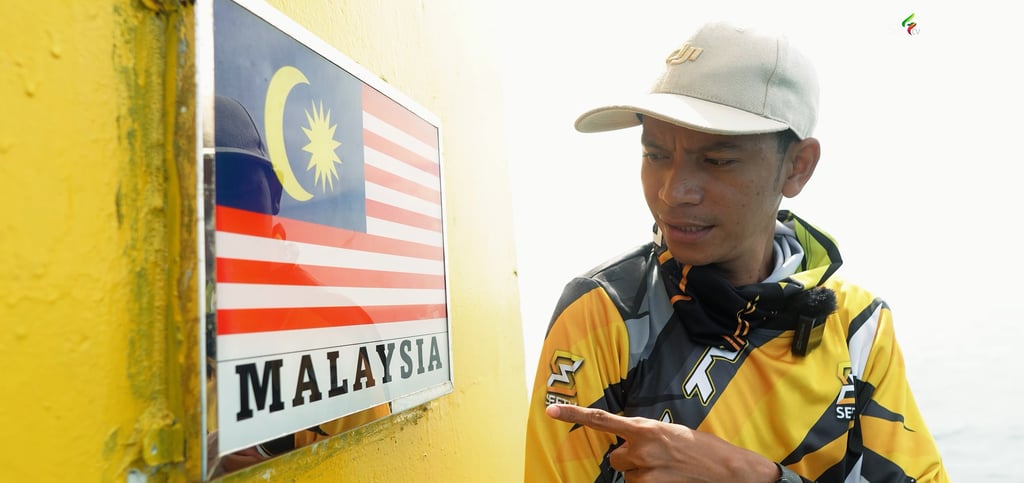
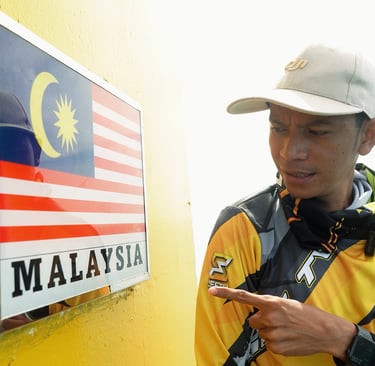
From North Mangsee, we took a short five-minute detour to find one of the giant boundary markers that separate the Philippines and Malaysia. Standing at the top of it, I could see Sabah on one side and Mangsee of Balabac on the other, with the Balabac mainland far in the distance. The marker was huge — and besides the one we climbed, there are four more.
Touchdown Mangsee
As we approached Mangsee, our phones buzzed with a strange text from Globe and Smart welcoming us to Malaysia. The Balabac mainland is so far away that phones here often catch the signal coming from towers on the Malaysian side instead.
We landed at Purok 4, one of only four puroks on the island. Word of a visitor spreads fast in a place like this. Children spotted me right away — one even shouted, "Look! That's Seftv!" We stayed at our guide's house, our home until the next day.
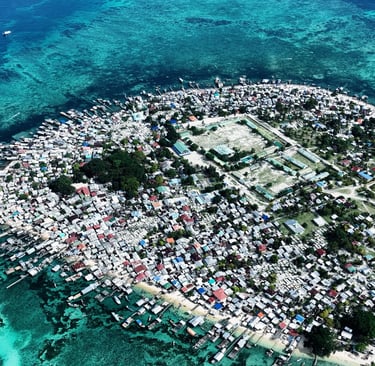
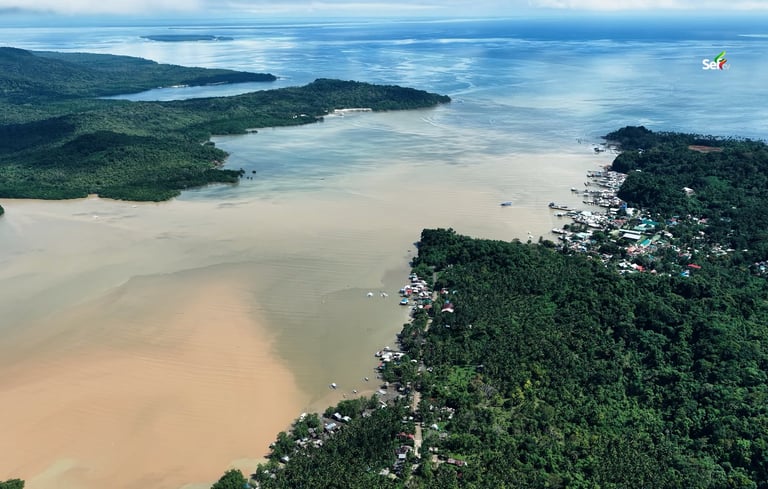
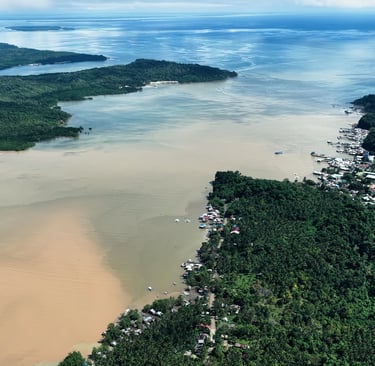
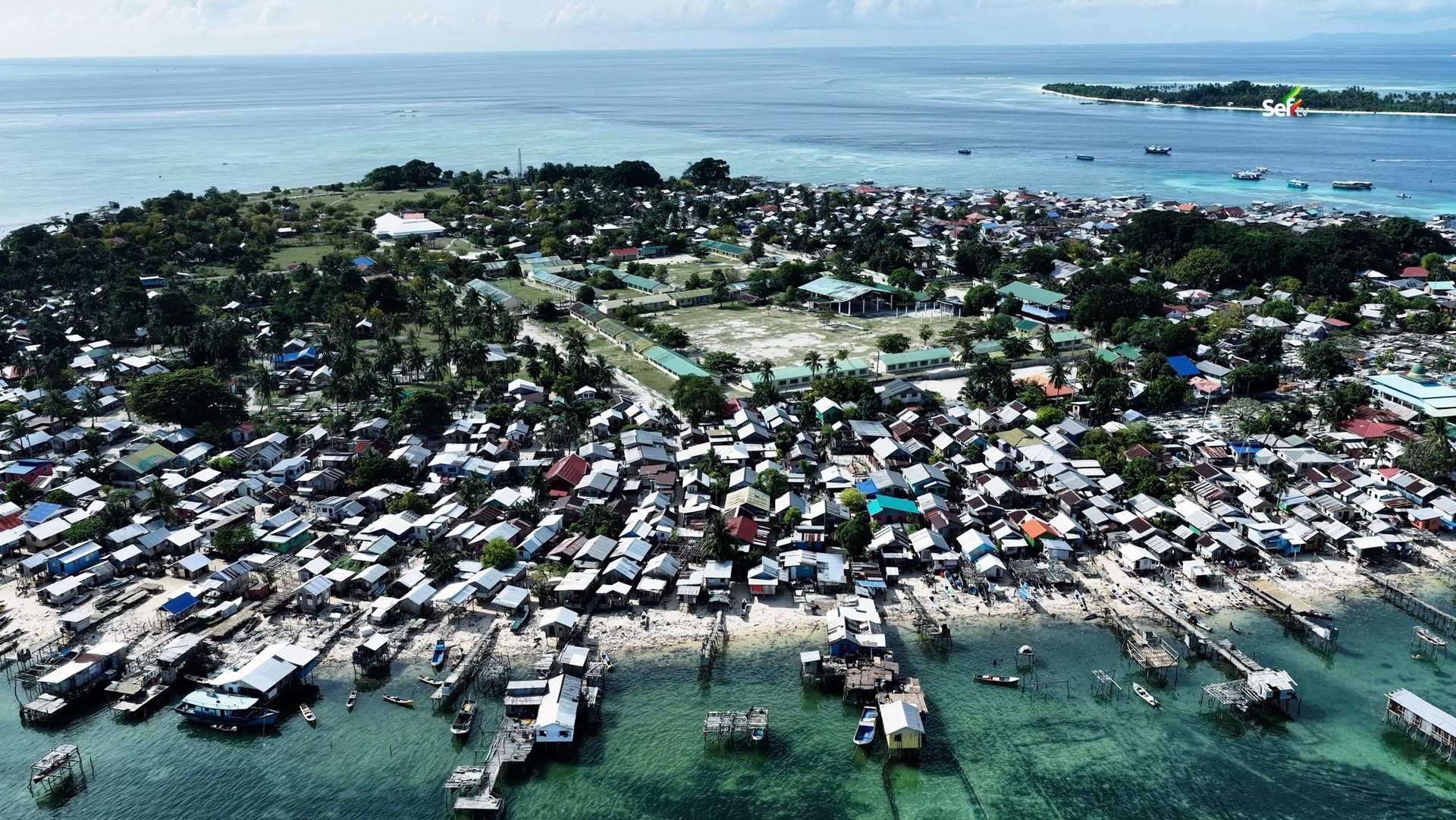
Mangsee covers a little over forty hectares at the very end of Palawan, yet it is home to more than ten thousand residents — more crowded, in fact, than many town centers. The nearest island under Malaysian control is only fifteen kilometers away, far closer than the center of Balabac. One resident told me that a strong person could reach Malaysian waters by paddle alone, no engine needed.
That closeness shapes everything. Most goods on the island come from Malaysia because they are cheaper — gasoline, instant noodles, canned goods, even Coca-Cola in bottles whose labels we could no longer read. I tried one. It tasted exactly the same as ours; only the name on the label was different. In one cluster of stores selling Malaysian products, I joked that there was no Smart signal on the island — because there, "Smart" is a brand of detergent soap.
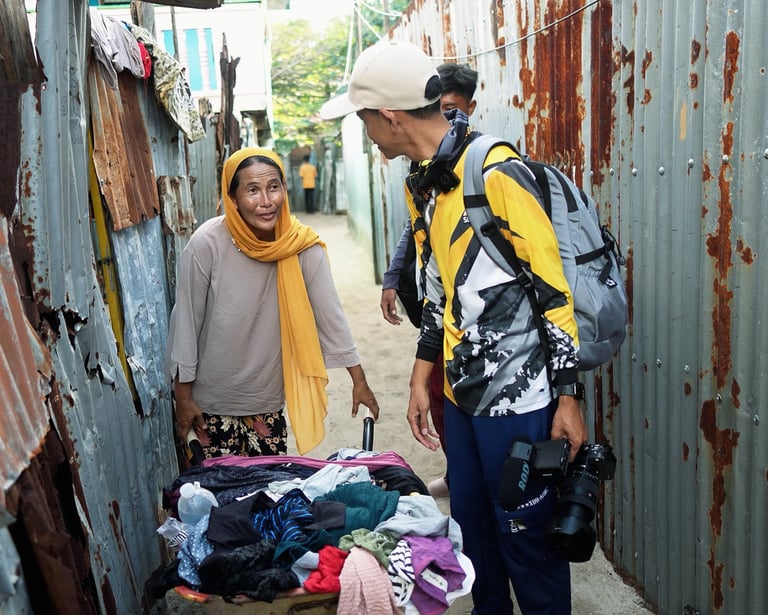
The island surprised me again and again. There is a department store in the middle of it, selling ready-to-wear clothes and malong. There are elementary and high schools, a hospital bigger than I expected, a park, and even a prison. A roving ukay-ukay seller pushed his secondhand clothes from Zamboanga around the island — the first time I had ever seen ukay-ukay sold on wheels. Motorcycles, all shipped from Puerto Princesa, zipped along sandy paths since there are no concrete roads in the interior. There is even an ATM service, and yes, they accept GCash. With all the twisting alleys between houses, I honestly lost track of where we were.
One thing amazed me about the land itself: dig almost anywhere and you will find fresh water, even near the edge of the sea. The locals believe the island's unusual sand is the reason. The surface sand is black, but dig a little and it turns white underneath — acting like a natural filter that keeps the salt water out.
At the port in District 3, boats of every size and shape crowded the shore, and houses by the sea came with their own "boat garages." An elder told me that in the old days, far fewer people lived there. The original families are like his, while most residents today trace their roots to Tawi-Tawi.
Connected, Welcoming, and Safe
Mangsee may sit at the edge of the country, but it is no longer cut off from the world. Thanks to Starlink, an island where people once barely knew Facebook or YouTube is now online and keeping up with the trends. Almost every person I met carried a cellphone.
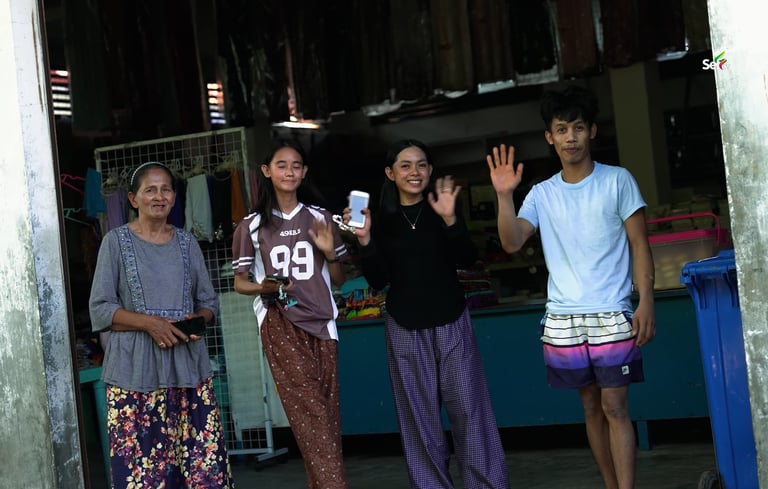
What I will remember most, though, is the warmth. As we were about to board our boat and leave, someone chased after us — not to ask for anything, but to invite us to eat. They did not know us, and we did not know them, yet a meal was laid out for strangers. That is the kind of people Mangsee has.
And to those asking whether it is safe to visit: we spent the night there, walked around even after dark, and explored the island freely. We had no problems at all. Our stay on Mangsee Island was smooth from start to finish — proof that at the farthest edge of the Philippines, you will still find the warmest welcome.
Loved this story? Share it with others.