
Matukad Island: The Fish No Fisherman Dares to Catch
In Caramoan's Matukad Island, two milkfish swim alone in a hidden lagoon. For over 50 years, no fisherman has dared to catch them. Here's the story behind the legend. This pairing leads with your strongest keyword, keeps the mystery that makes people click, and fits the ideal length for both Google and social previews without getting cut off.
FEATURED STORIES
6/30/20267 min read
The Fish No One Dares to Eat:
Inside the Enchanted Lagoon of Matukad Island
By Joseph Pasalo
I had heard the story long before I ever set foot on Matukad. Somewhere in the middle of this small, rocky island in Caramoan, hidden behind a wall of sharp stone, there is a quiet pool of water where two fish swim alone. People here believe they are no ordinary fish. Some say they are the pets of a fairy. Others say they are two princesses, both of them female. What everyone seems to agree on is this: in more than five decades, no fisherman has been brave enough to catch them, cook them, or bring them home.
That single story was enough to pull me all the way to Camarines Sur.
Watch the video
Ten hours to the edge of Luzon
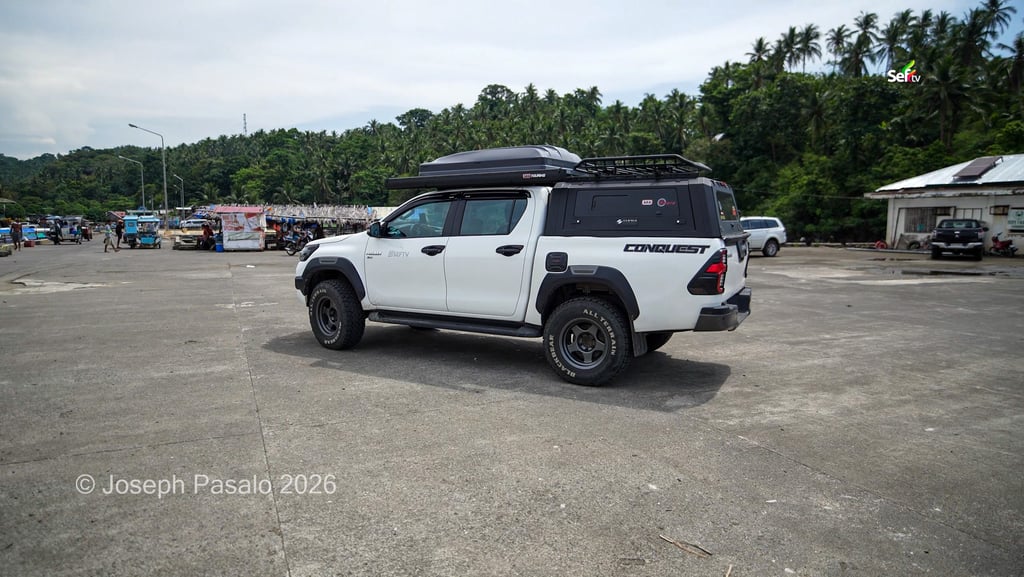

From Northern Samar, we traveled for more than ten hours before we finally reached this remote corner of Camarines Sur. Caramoan is not completely cut off from the mainland, but it feels like an island just the same. Life here moves slowly. The people are simple and the days are quiet, and you feel it the moment you arrive.
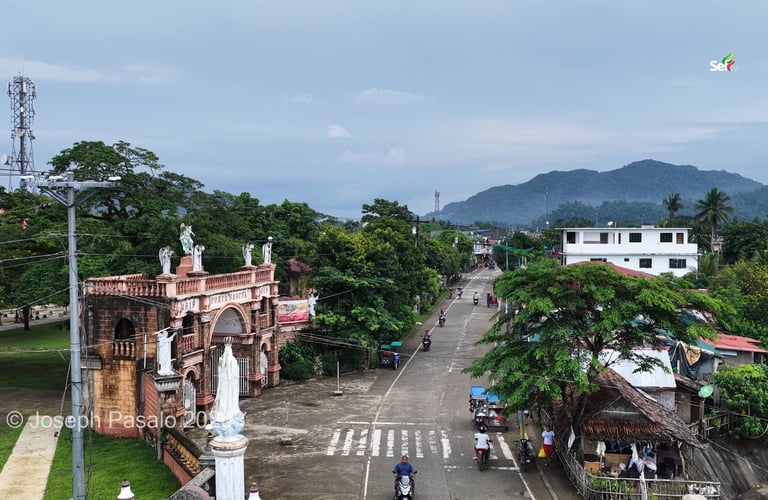
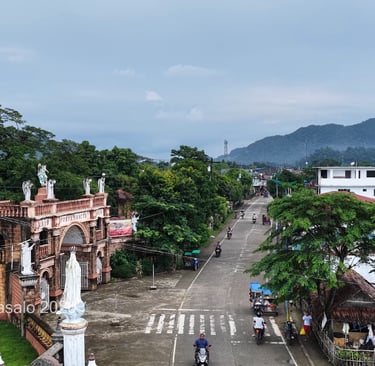
We found a place to sleep near the center of town. In front of the old church is a wide open space where the people of Caramoan gather, surrounded by houses, small shops, and the public market. The church itself is said to be more than 400 years old. You can see its age in the worn stone and the fine, careful details of its design. Beautiful as it is, most travelers do not come here for the church. They come for what lies offshore — the islands that draw visitors not only from across the Philippines but from other countries as well.
A market full of smoked fish — and "Adiapas" slippers
Before we chased any island, I wanted to see the town market first. I always look for the things you rarely find anywhere else, and here it was the smoked fish. We had seen smoked fish before, especially in Calbayog, Samar, where it is something of a specialty. But in Caramoan, the variety surprised me: small mackerel scad that locals call burot, saltwater sardines, bullet tuna, even bullet tuna sliced and smoked. If you ever visit, come on a Sunday. That is market day, and the covered court fills up with everything the town has to offer.
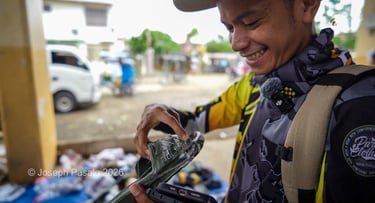
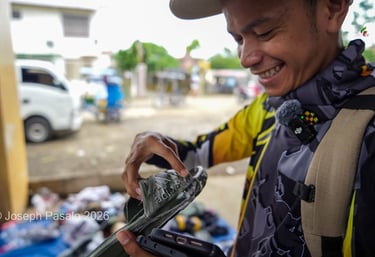
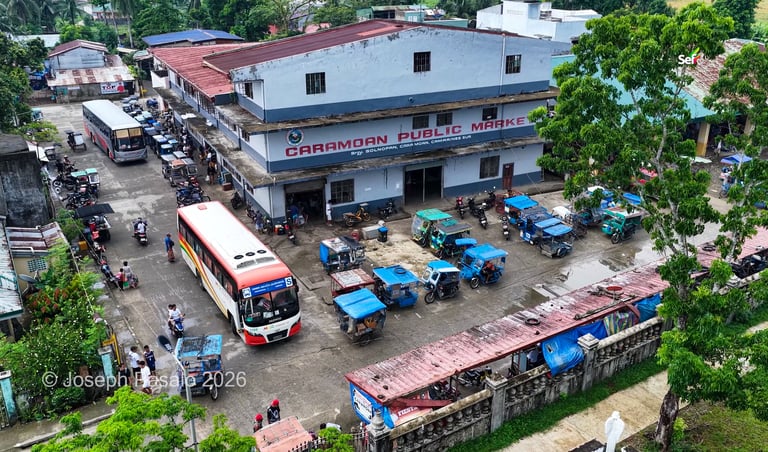
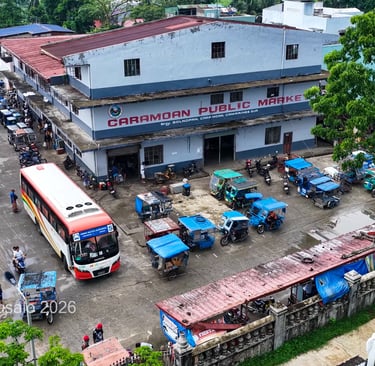
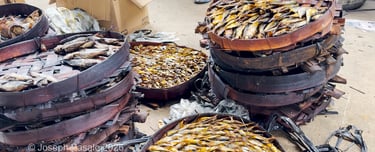
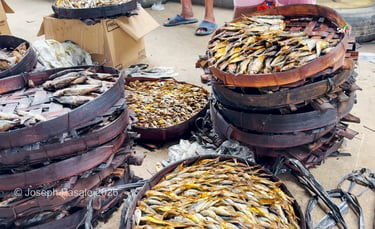
I also could not stop laughing at the slippers on sale. One brand was stamped "Adiapas." Another read "Leo." Close enough, I suppose. We bought a pair anyway.
It was at this market that I met the man who would change the whole trip. He is a local content creator known online as Gayon Oragon Vlogs, and he kindly offered to come along and show us the side of Caramoan that visitors almost never get to see. I did not know it yet, but he was about to take us up some of the most dangerous rocks I have ever climbed.
Where the only road is the sea
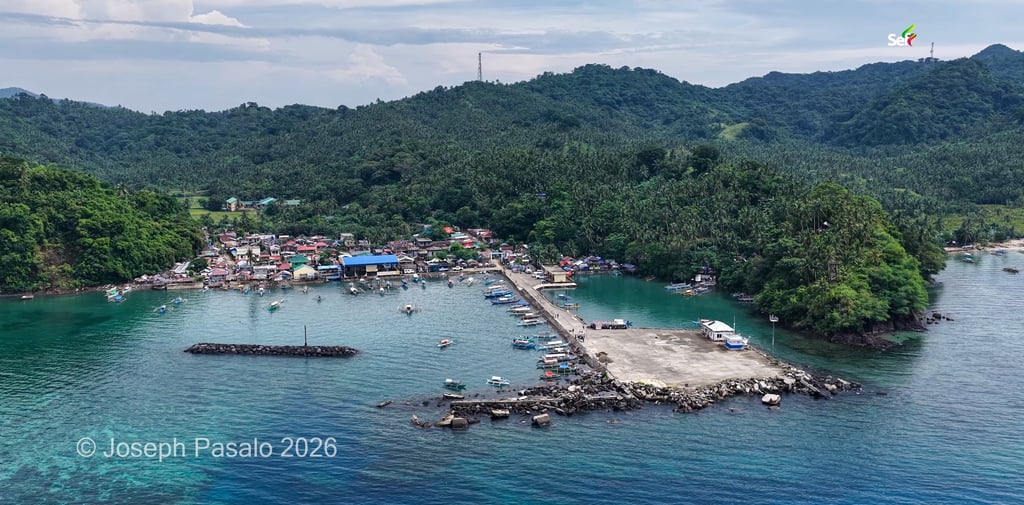
We made a quick stop in Barangay Guijalo, the port that serves as the main way in and out of Caramoan. It is a wide port, but only small boats dock here — these little wooden boats that wait for passengers heading to the nearby islands, and even all the way to Catanduanes. Many of the villages around the town are connected by road now, but a few can still only be reached by sea. That is why this stretch of coast feels almost like a bus terminal made of water.
By the shore, fishermen showed me their catch, including a fish they call gila-gila. The best way to cook it, they told me, is in coconut milk.
From there we crossed to the other side of Caramoan, to Barangay Paniman, where the island-hopping boats are based. Part of the bridge along the way was still under construction, so cars were not allowed through. We left ours behind and walked the rest of the way to the beach, past a river that opens into the sea with the mountains standing tall behind it — one of those views that makes you stop and just look.
At the small tourist booth, we booked our boat. A short trip costs ₱2,500 and a long trip ₱3,500, with the islands for each clearly listed. The beach at Paniman was spotless and calm, the boats neatly lined up, with families boarding for the long ride home. School was about to start again, and some of the passengers carried suitcases for the journey back to the far villages.
Three islands before the one I came for
Our first stop was Minalagos Island. We could hear the laughter and shouting of happy tourists from far off the water. The name, our guide explained, comes from a small tunnel on the island — mini plus lagos equals Minalagos. He led us up the rocks to a view I will not forget: an open lagoon on the far side that looked, honestly, like a piece of Coron, Palawan.
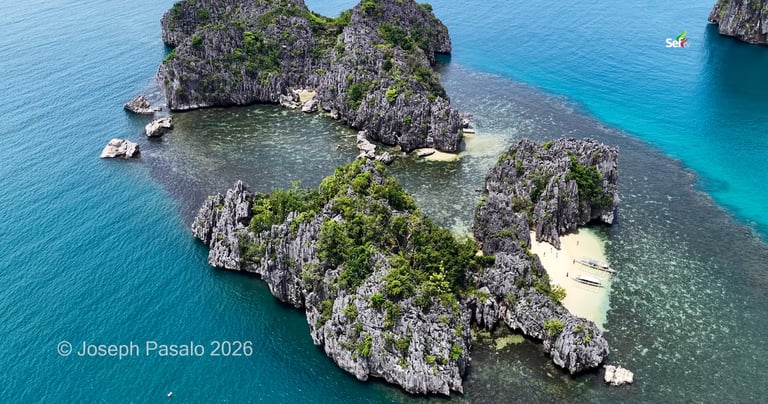
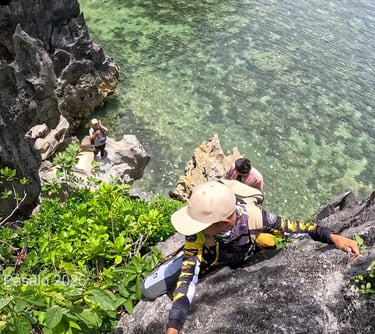
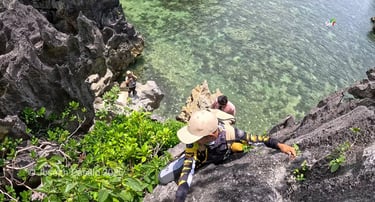
But the climb was no joke. There are no harnesses here — just your hands and your feet against rock so sharp it cuts. Very few people climb it, our guide admitted, because it simply is not safe. By the time we reached the top, my hands were red and my brand-new slippers were full of holes. Still, standing up there, looking down at that lagoon and the fine white sand below — sand that turns to powder when it dries — I understood why he wanted us to see it.
Next was Busdak Island, which is so low that it only appears at low tide. When the water rises, the island disappears completely. Its sand is a mix of black and white, and because there are no rocks or corals underfoot, it is one of the easiest, softest places to swim.
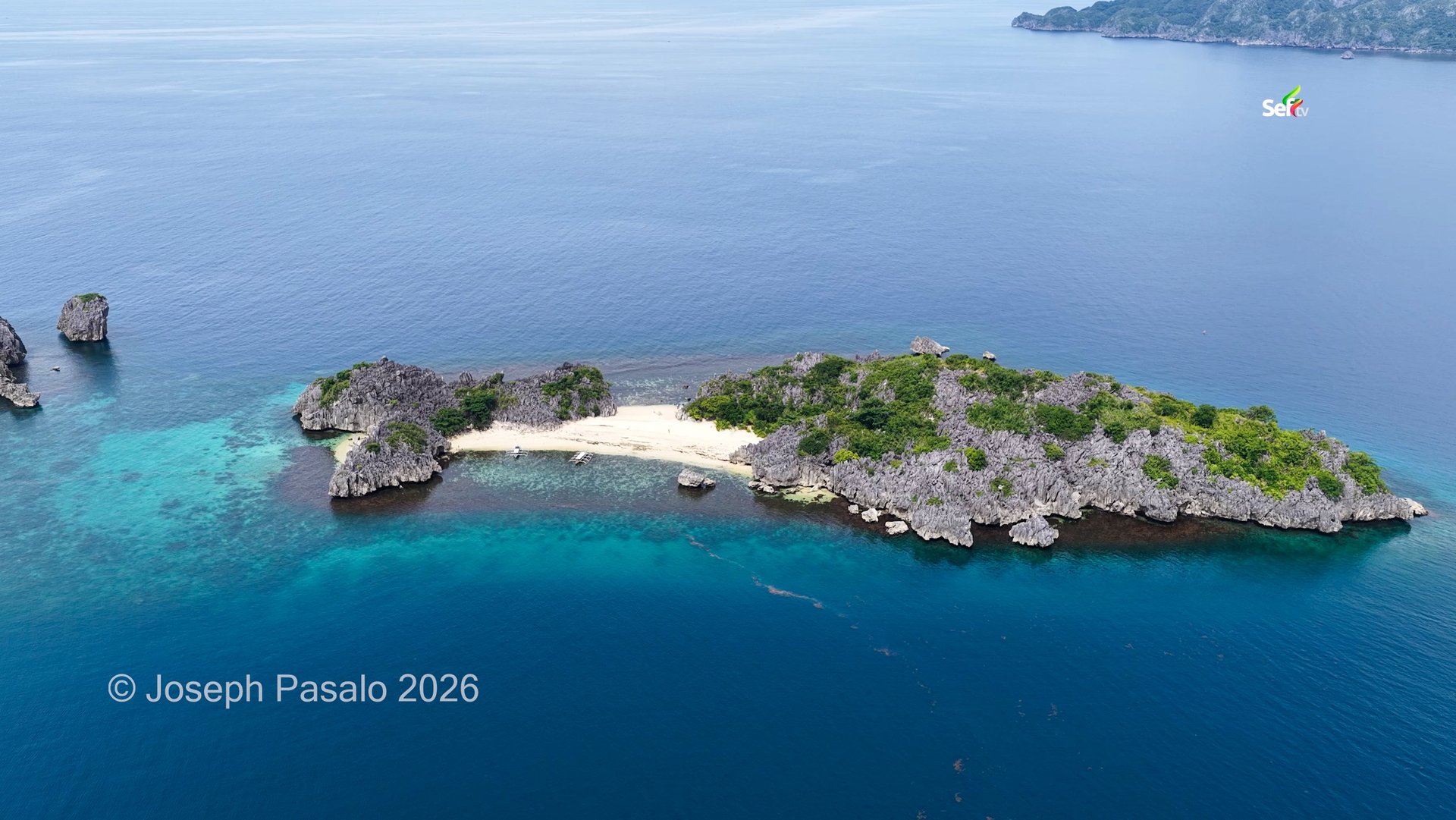
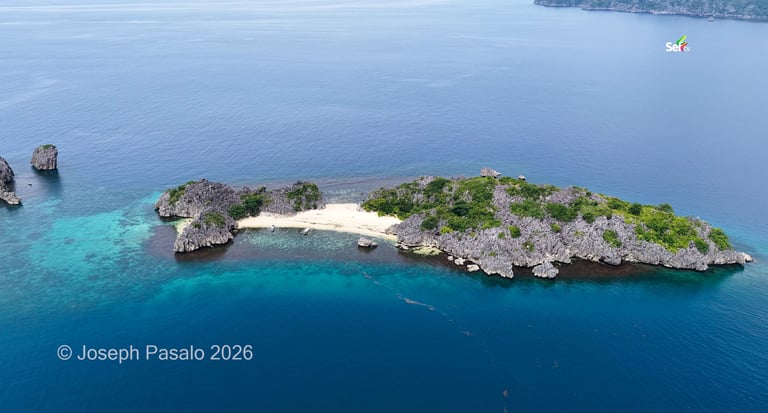
Then came Lahos Island. The name comes from the local word for "passing through," and it fits perfectly — at high tide the water cuts straight across, and the views pierce right through to the other side. From there you can see Catanduanes on one side and mainland Luzon on the other. How clean the beach looks depends entirely on the wind, which decides which side collects the sea grass. From one angle the island even looks like a crocodile, and from the back like a turtle, which is why some call it a "crocoturtle." We found a shell shaped exactly like a human tooth and joked that if it bit you, you would swear it was a crocodile.
The climb to the silent lagoon
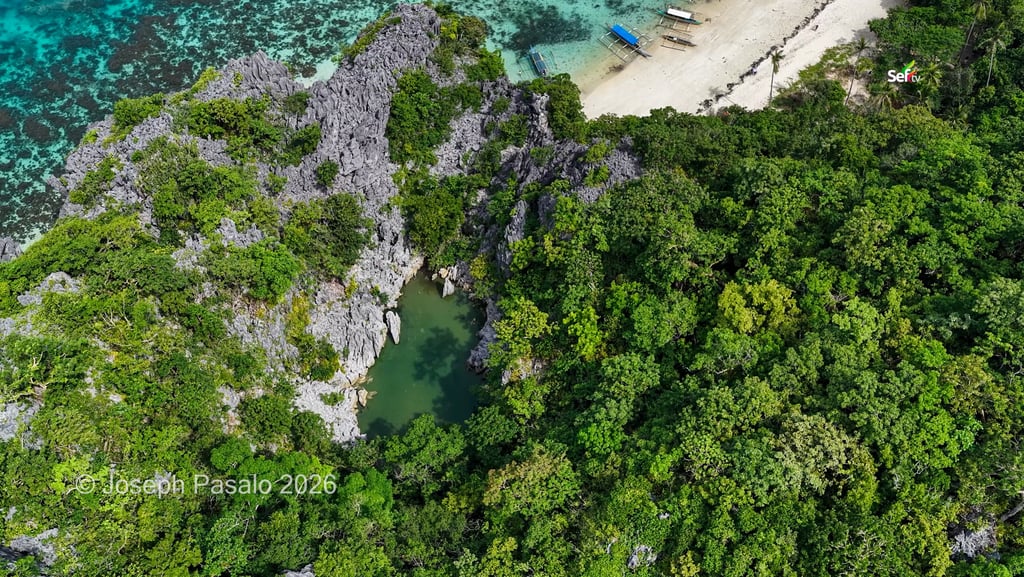
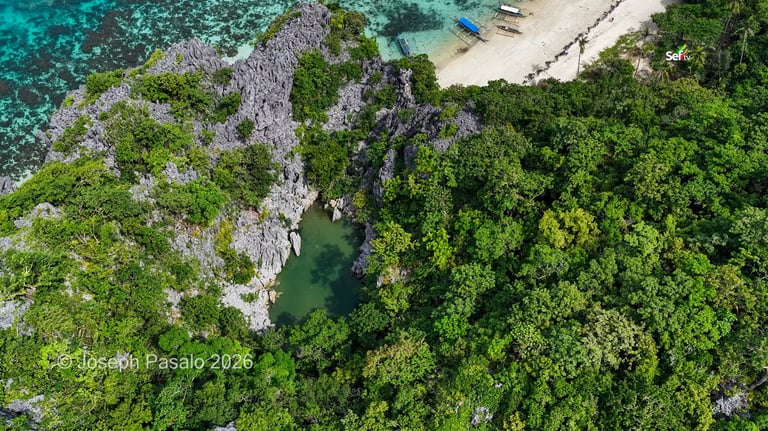
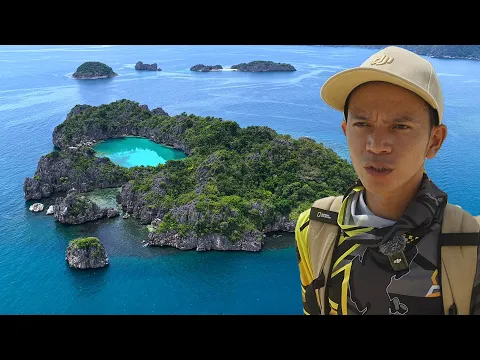
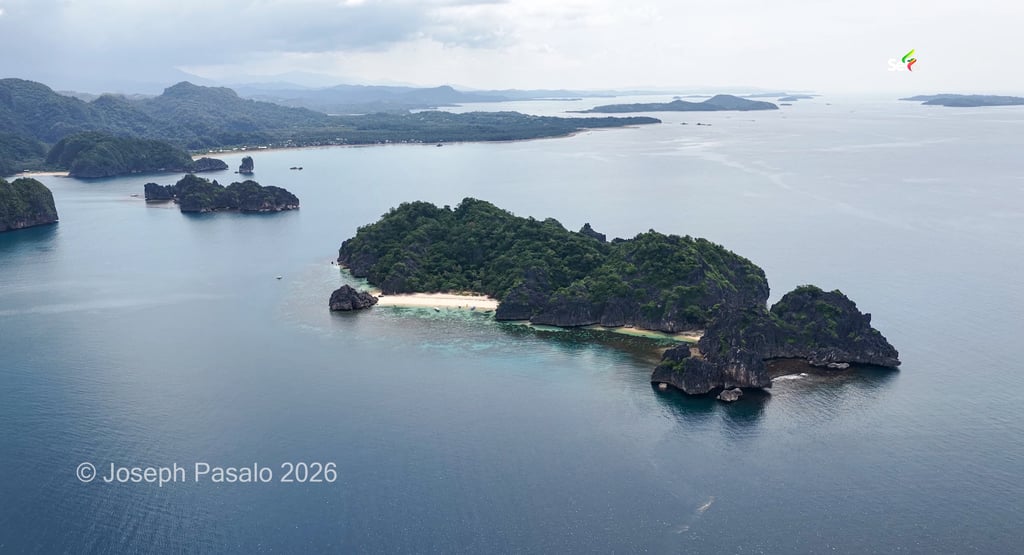
It took us a little over ten minutes to reach Matukad, the island I had come all this way for. It is wider and has more to offer than the others, so visitors tend to stay longer. The popular beach was crowded and loud, full of Caramoan families on an outing, someone even singing somewhere in the background.
But I was not there for the noise. I was there for the enchanted milkfish.
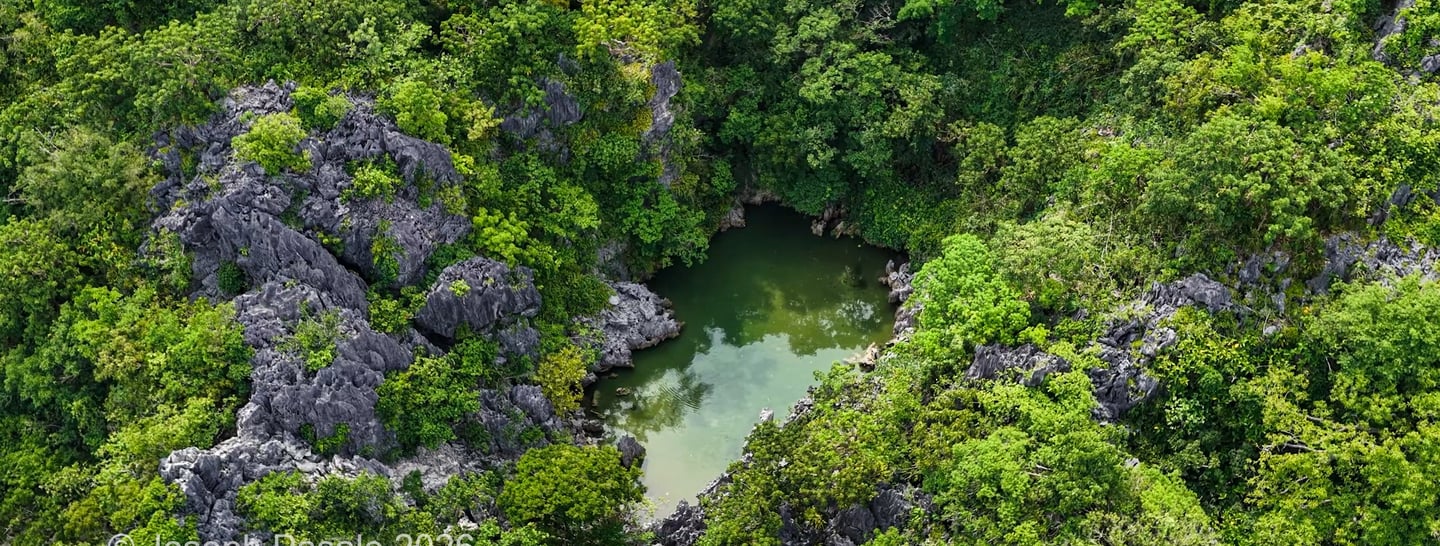
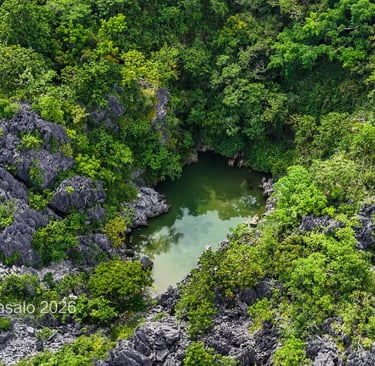
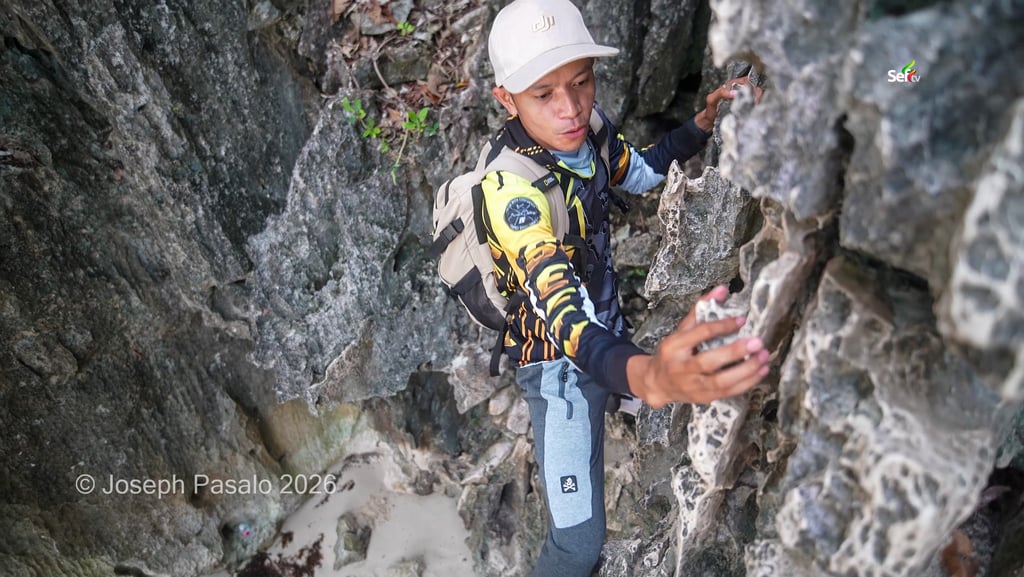
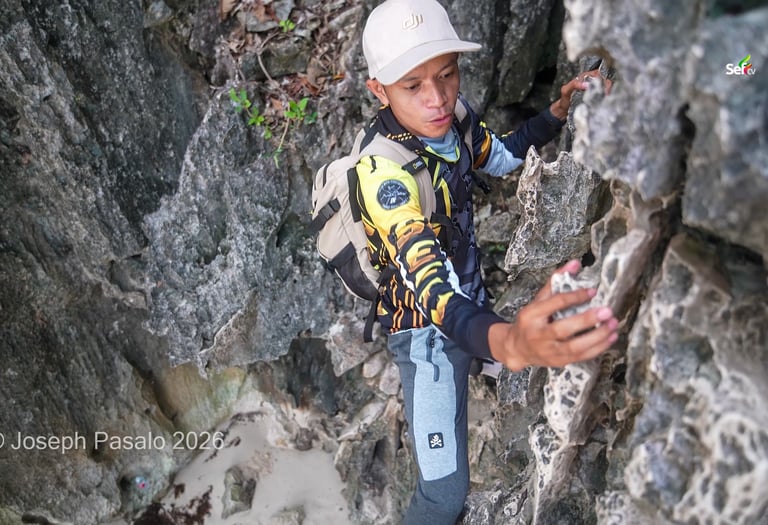
Behind that busy beach, where the rocks rise up, the silence takes over completely. With no harness and only our hands and feet, we climbed and clung to the sharp stone, going up and then back down toward the hidden water. After several minutes, we finally reached it — the enchanted lagoon. And there, swimming calmly in the middle, were the fish.
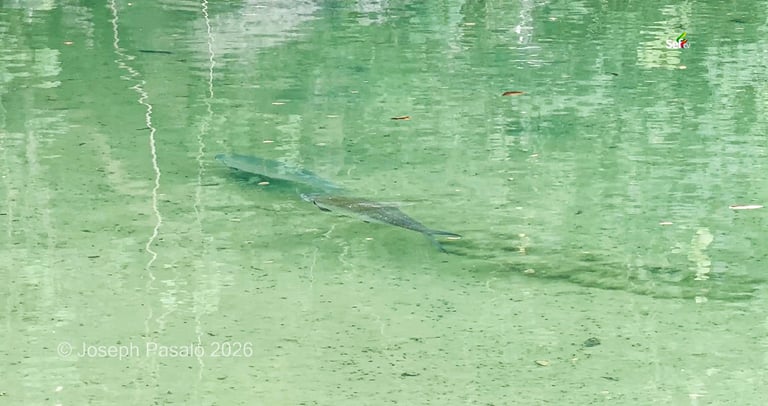
They are not shy like other fish. We could see them clearly from a distance, gliding through water that is part fresh and part salt — a little salty, but nothing like the sea. The lagoon looks shallow, but the guides warn that the bottom is quicksand. If you sink into it, they say, it will swallow you and you will not come back up. When the rains are heavy the water seems to rise, though no one can quite say where it comes in or where it goes.
A story that keeps the fish alive
There are many versions of this story, and you will hear them even outside the province. The one that stayed with me goes back more than fifty years.
A fisherman, they say, once caught one of the fish here in the Matukad lagoon. Milkfish were common enough, so he thought nothing of it. He brought it home, cooked it, and shared it with his wife and their one-year-old son. Two weeks later, the child fell ill with a sickness no one could explain. Not long after, he died.
Since that day, no one has touched the fish. No one has tried to catch them, and no one has dared to eat them. Left alone for all these years, they have grown to a size that is almost hard to believe. The older one is said to be more than 40 years old. The second only appeared in 2018, which makes it about seven. Stranger still, they have never reproduced, and apart from the two of them, there seems to be no other life in that water at all.
By the time we climbed back down, it was already three in the afternoon, and the sky was beginning to change. The rainy season was coming, and here that means strong wind, lightning, and a downpour by late afternoon, like clockwork.
We had only spent a few hours on these islands. But it was more than enough to see why travelers keep finding their way to Caramoan — and why, in the middle of all that beauty, there is one small pool of water that everyone is content to simply leave alone.