
The Most Dangerous Road I've Ever Taken, and the Hidden Gold Town at the End
The locals told me the road to Boringot was too dangerous for our Hilux. So we left it behind in Pantukan and climbed onto motorcycles, deep into the mountains of Davao de Oro. What waited at the end was muddy cliffs, falling rocks, and a hidden village that lives and breathes gold. This is the most fear I've ever felt on the road — and the story of the people who call it home.
FEATURED STORIES
Joseph P.
6/28/20266 min read
Ride to Boringot, the Gold Town in the Mountains
The Philippines Most Dangerous Road
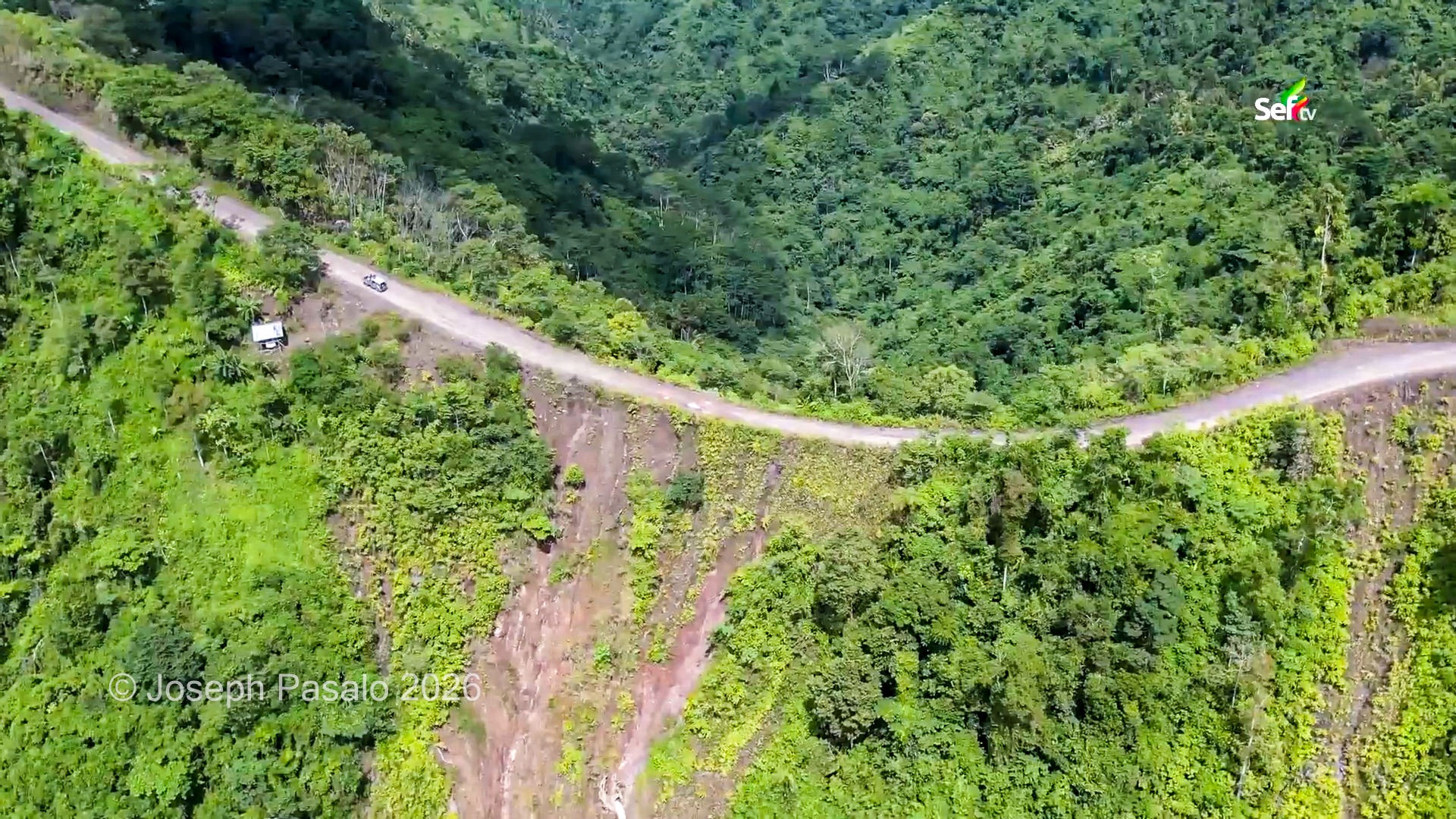
The first thing I heard was not an engine. It was a sound like a chainsaw — a high, ripping growl bouncing off the side of the mountain. Up here, on one of the most feared roads in the Philippines, that noise is not a bother. It is a warning, and sometimes a way to stay alive. A loud motorcycle can be heard from far away, and on a path this narrow, hearing the rider coming from the other side can be the difference between passing safely and falling off the edge.
I have filmed in many corners of our country. But the road to Sitio Boringot, deep in the mountains of Pantukan, Davao de Oro, gave me a kind of fear I had not felt before.
Leaving the truck behind
For the past few days, my team and I had been exploring the mountain areas of Sultan Kudarat. This time, we crossed into Davao de Oro to see how the people who live high in these mountains get by. I kept hearing the same thing from the locals: the road to Boringot is dangerous. The place sits far up, deep in the highlands, near the boundary of Davao de Oro and Davao Oriental.
We started from the town proper of Pantukan. Right away, the plan changed. There was no point bringing our Hilux any farther. The road, the locals told us, was too steep, too slippery, and too dangerous for four wheels. So we left the truck in town and climbed onto motorcycles instead.
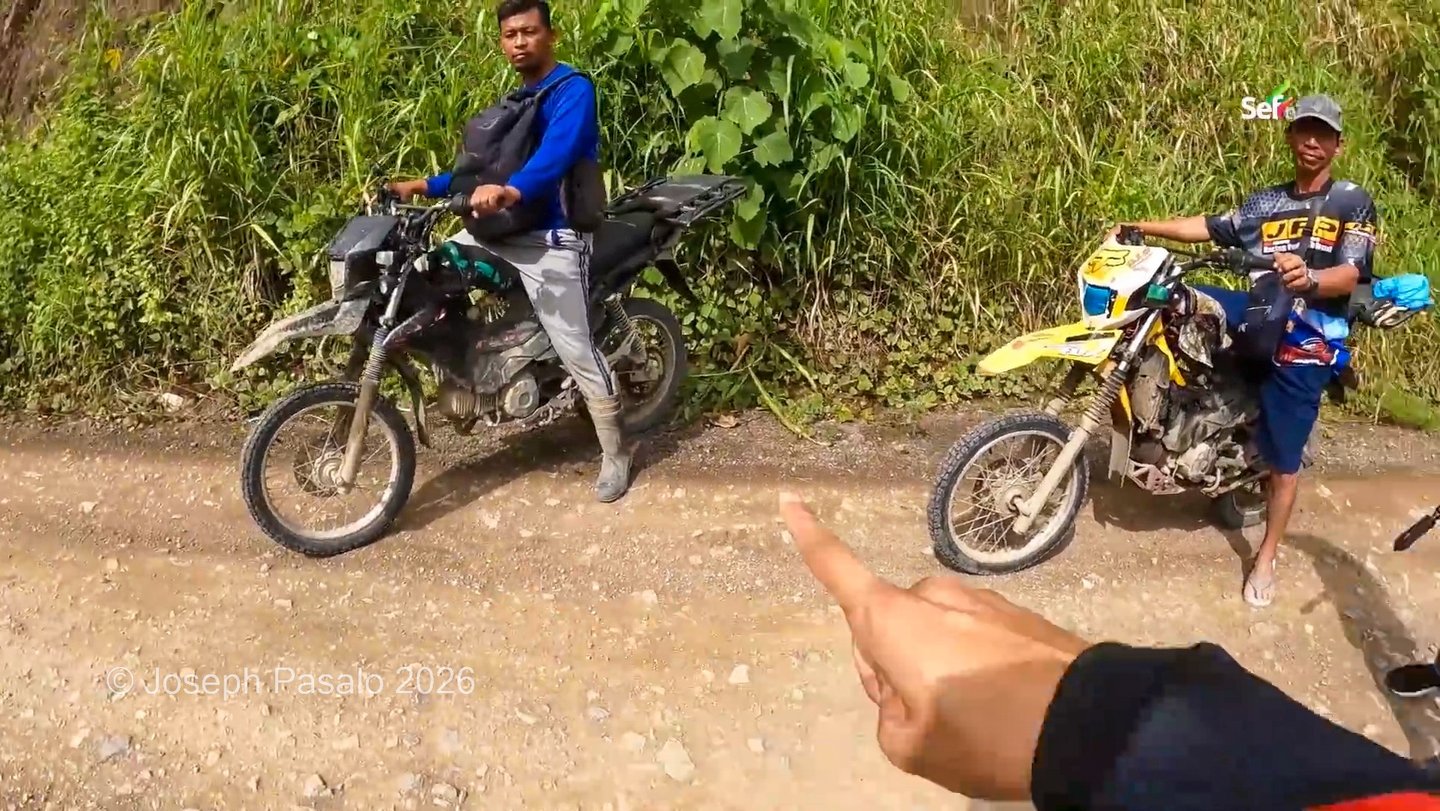
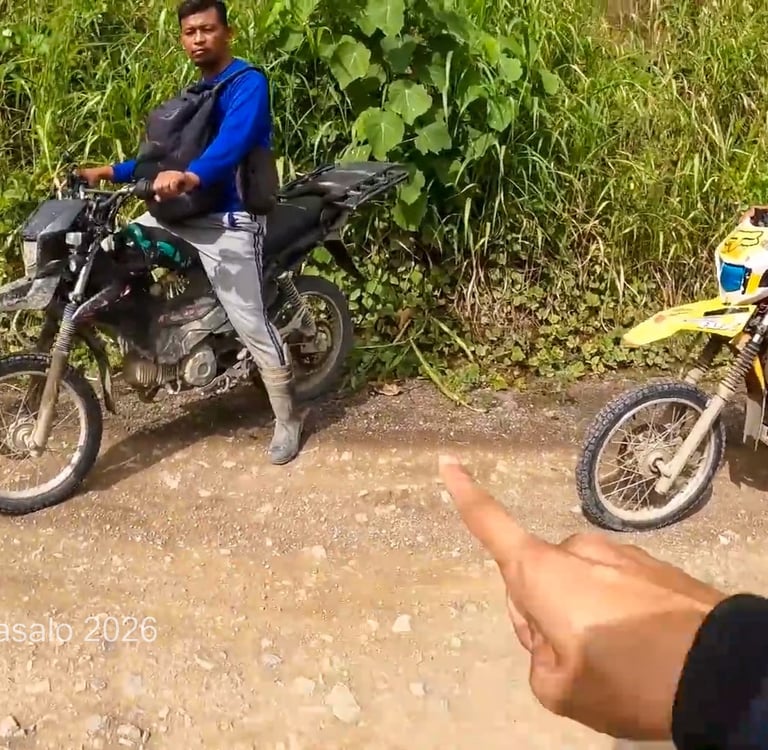
Our drivers were Sir Roger and Sir Glenn, both from Pantukan. These two men know this road the way I know a camera. They are experts on this kind of terrain, and that is exactly why we hired them — to get to Boringot safely, and to bring us back home in one piece.
Their motorcycles looked like adventure bikes, but they were ordinary Honda XRMs, only built up for the mountain. The seats were raised so the bikes could clear the rough ground, and a cargo rack was welded on the back to hold the bags and supplies of passengers heading up the slope. From the edge of town, they told us, the ride would take more than forty minutes
A road that fights back
The first stretch was easy on the eyes. We rode past wide banana plantations that stretched for hectares, all the way from the boundary of Tagum. The fields here are so large that small airplanes are used to spray them — we watched one pass overhead.
Then we reached Barangay Napnapan, where the cement road ends and the rough road begins. We stopped to tie down our gear. In the deep ravines and on the narrow paths ahead, anything loose would bounce and shift, so everything had to be secured. From there, I looked up at the mountains we still had to cross. They were enormous.
Once the rough road took over, it never let go. I kept thinking of Halsema Highway in the north, back before it was paved — that is the closest thing I can compare it to. The weather was beautiful that day, clear and bright, yet the road was thick with mud. There is no proper drainage to carry the water down from the mountain, so the path stays wet and heavy no matter the sky.
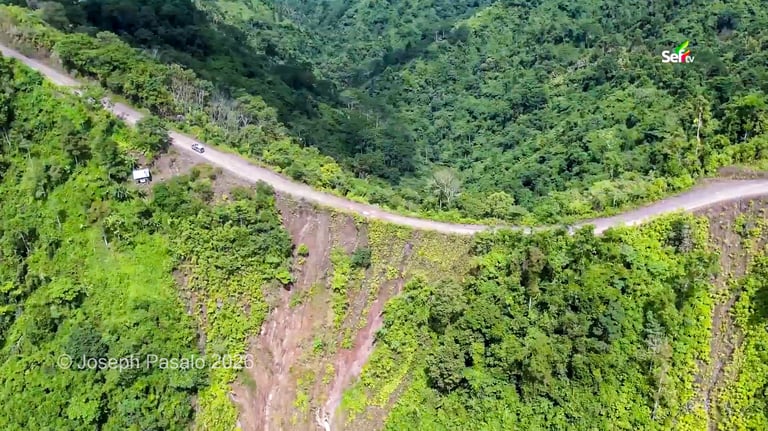
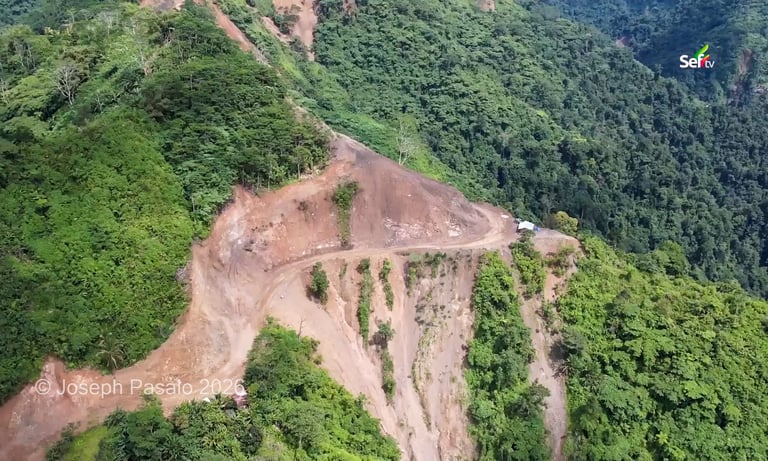
I did not expect how rough it would get. Mud. Deep holes. Landslides. And on the side, a drop so steep that only the narrow shoulder of the road keeps you from going over. We climbed so high that my ears began to feel the pressure, the way they do on a plane. From the town below, I had thought one mountain looked tall. From up close, the mountain we actually had to cross was far higher.
The places people fear
About two kilometers past a checkpoint, we reached a spot the locals call Duyan. Here the road dips and rises so sharply that a motorcycle coming down seems to plunge into the middle of the path before climbing the other side. Whether you are on a single motorcycle or a four-by-four, you have to be very careful — the road is steep, and there is two-way traffic on a path barely wide enough for one.
This is one of the reasons Boringot's road is so feared. Many riders have fallen and been hurt along here. That is also why the loud, chainsaw-like engines matter so much. Riders with quieter motorcycles have to honk constantly, just to make sure no one comes flying around a blind curve straight into them.
Farther along, we were stopped completely. Part of the road was under construction, and it was simply too dangerous to pass — rocks were breaking loose from the mountain as it was being cut into. This happens every day. Sometimes the motorists are allowed through; sometimes they wait. Ahead of us were riders who had arrived even earlier, still sitting and waiting for the road to open. Nearby, heavy equipment worked to make this stretch a little safer.
What surprised me most was the speed. You would think people would crawl across ground like this. Instead, the riders move fast. Because of the falling rocks and the landslides, lingering is the real danger — so they hurry through the worst parts rather than slow down.
Arriving at Pulang Lupa
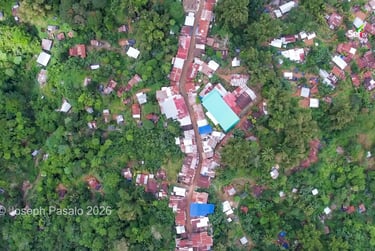
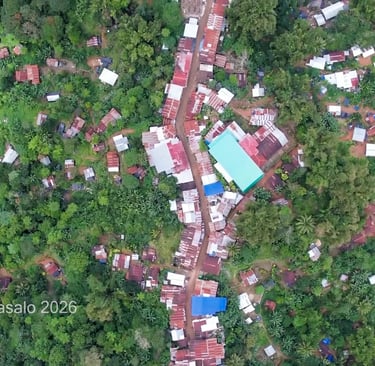
After more than an hour from the foot of the mountain, we finally reached Sitio Boringot, part of Barangay Napnapan. I looked back at the road we had just survived, winding across the mountainside, and all I could say was that it was breathtaking. I have visited so many places in the Philippines, but here, for the first time, I truly felt afraid — the cliffs were that deep, the landslides that severe, the mud and potholes that endless.
The locals have another name for this place: Pulang Lupa, or Red Soil. You can see why. The earth here is a deep red, the same kind of ground you find in areas prone to landslides.
At the motorcycle terminal, riders waited for passengers while damaged bikes were being repaired off to the side. I asked one of the drivers about the work. Yes, he said, the road is hard, and yes, he has had accidents. The fare to come all the way up here is five hundred pesos per person.
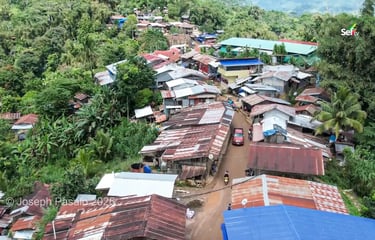
Then I asked the question I had been carrying the whole ride: why? Why do people live here, at the end of a road like this? The answer was one word — gold.
Living for the gold
Mining is the heartbeat of Boringot. Just like in Diwalwal, the famous gold area in the town of Monkayo, the people here make their living from small-scale mining, and you can see their work all over Barangay Napnapan.
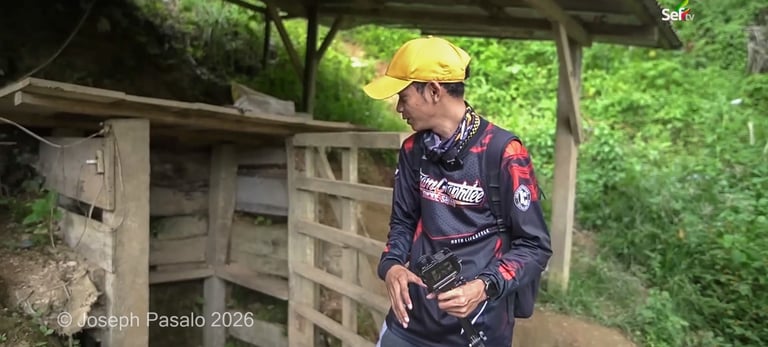
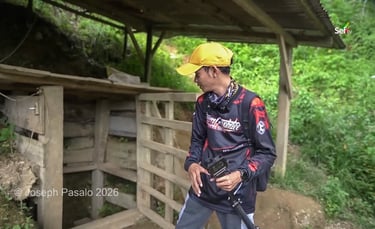
Near the terminal, I watched one of the processing sites. A spinning machine crushes the stones brought up from the mine, and beside it, the crushed rock is washed and cleaned to draw out the gold. A few meters on, we reached one of the tunnel openings the miners call a portal.
I will be honest — it was not what I expected. If no one had told me, I would have thought it was a toilet. Instead of cutting upward into the mountain, this tunnel goes straight down. A simple guard rail on the side doubles as the ladder the miners use to climb in. A hose connected to a machine pumps air all the way to the bottom, which tells you just how deep that hole goes.
And this was only one. Boringot is dotted with tunnels and portals like it, each with its own processing site, each leading down into the mountain. The ground here is rich in gold, and that is the whole reason the people stay. They live the same hard life as the miners of Diwalwal — far from town, on a road that frightens even me, all for what lies beneath their feet.
Riding back down that afternoon, I understood Boringot a little better. The road is brutal, the danger is real, and yet every day people choose to make this climb. The mountain asks a great deal of them. For now, the gold gives them a reason to answer.
Watch the video
