
This Crowded Philippine Island Is Sinking — And May Soon Disappear
Batasan Island in Bohol floods with every high tide. Discover how this crowded Philippine island community lives with rising seas — before it disappears.
FEATURED STORIES
Joseph P.
6/11/20264 min read
The Crowded Island That's Slowly Sinking Into the Sea
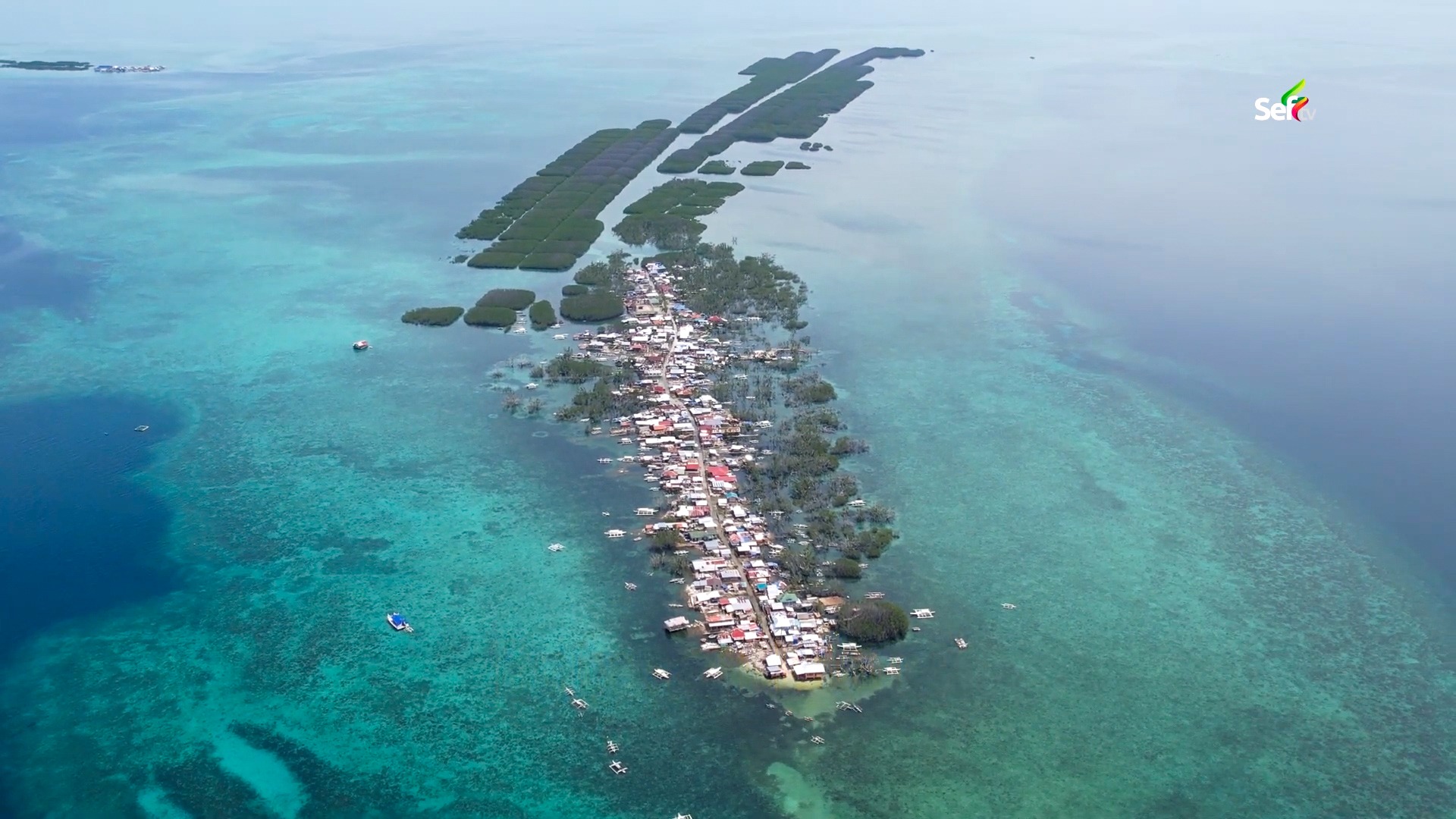
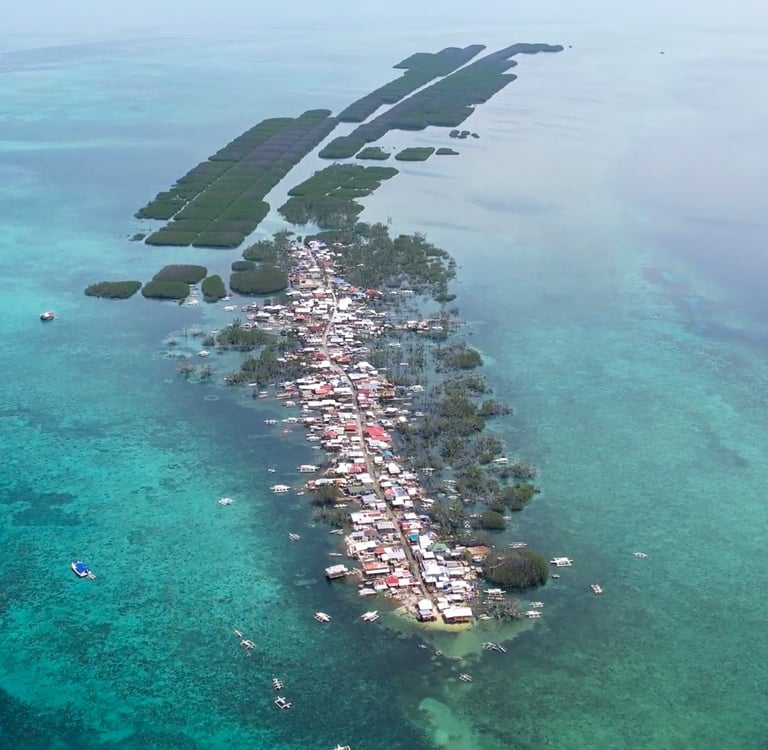
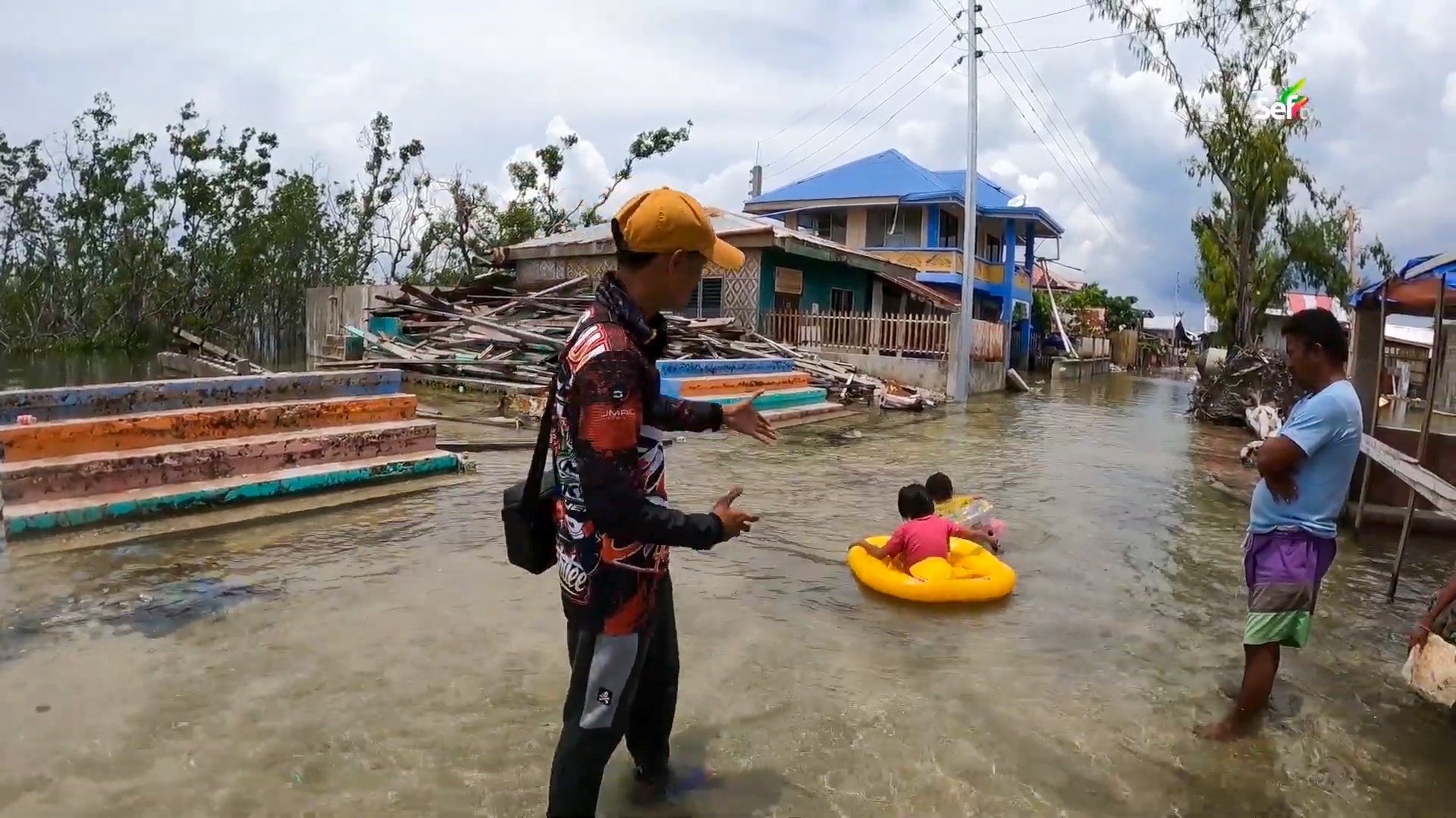
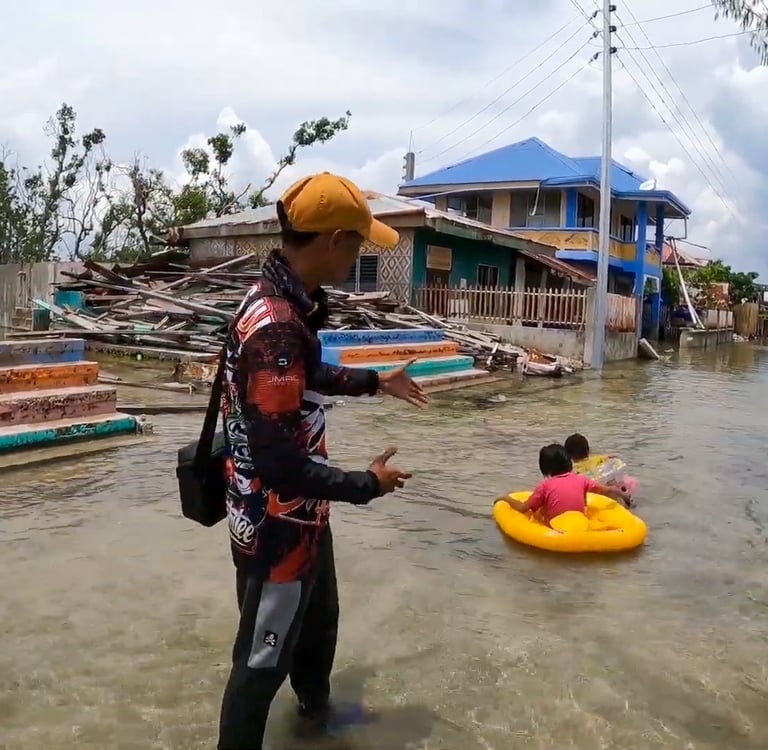
On Batasan Island in Bohol, the streets flood with the tide, children paddle lifeboats to get around, and an entire community is learning to live with the water — because one day, the island may not be here at all.
The Philippines is a nation of more than 7,000 islands, most of them celebrated for their paradise-like beauty. But scattered among them are islands with a very different story — tiny, low-lying communities that are quietly disappearing as the sea rises around them. In one of his island-hopping vlogs, traveler Joseph Pasalo of Leyte set out to document one of them before it's gone: Batasan Island, off the coast of Tubigon, Bohol.
A Journey That Almost Didn't Happen
Getting to Batasan was an adventure in itself. From the town of Catigbian, Joseph rode more than twenty minutes to the port of Clarin, the closest jump-off point to the island — only to find boats neatly docked and not a single operator in sight. No boatmen, no passengers, no trips.
So he backtracked to the town of Tubigon, left his motorbike at the port, and boarded a passenger boat instead. In this corner of Bohol, you know where a boat is headed by the names painted on its hull — BagongBanwa, San Rafael, Pangapasan, Batasan. His boat stopped first at Pangapasan Island to unload cargo, then pushed on for another twenty minutes across water so clear that even the deep seabed was visible, with islands like BilangBilangan, BagongBanwa, Mocaboc, and Ubay dotting the horizon.
Even arriving wasn't simple. The boatman admitted he rarely goes to Batasan because the rocky shallows make it hard to dock.
A Road That Belongs to the Sea
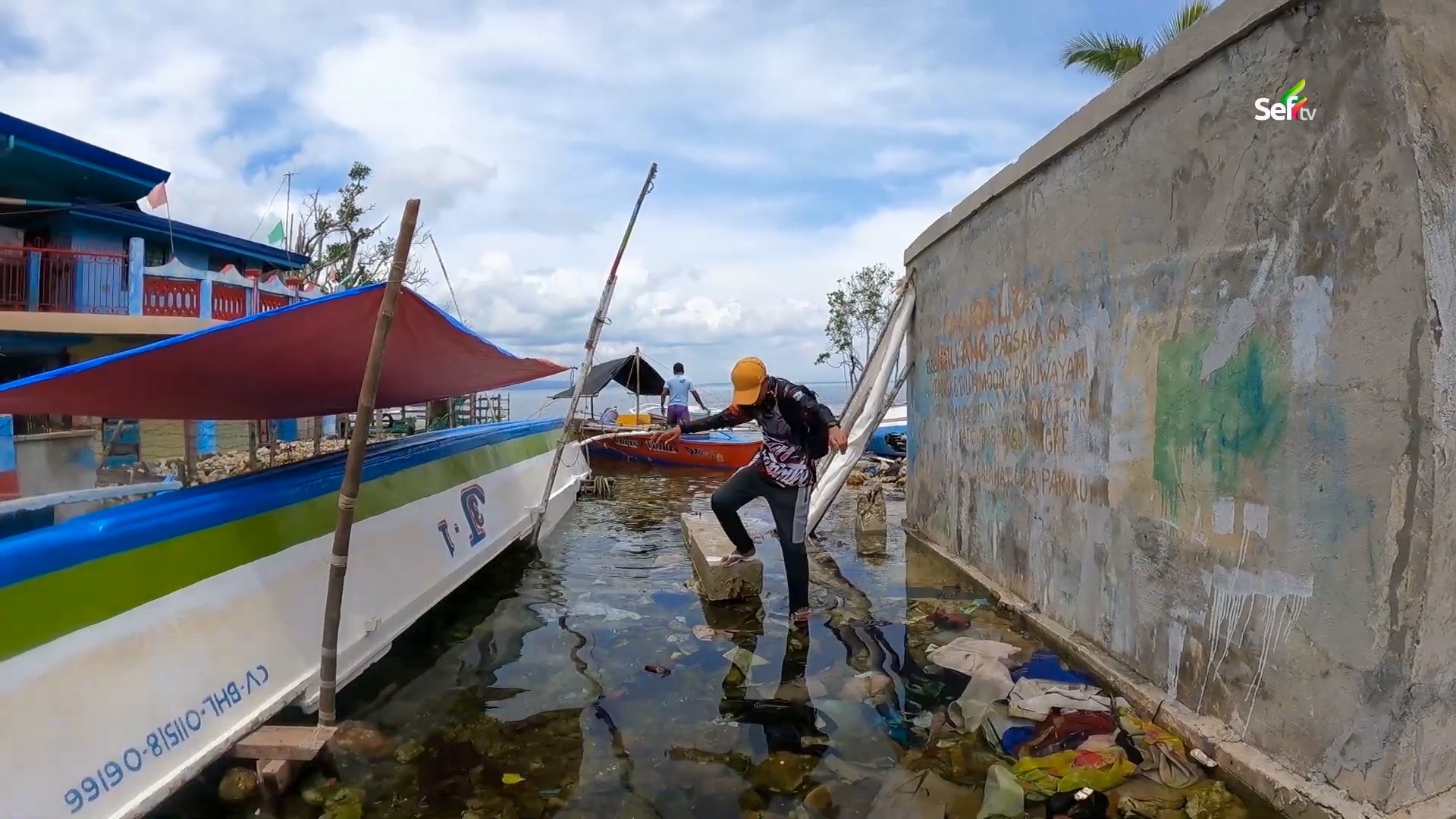
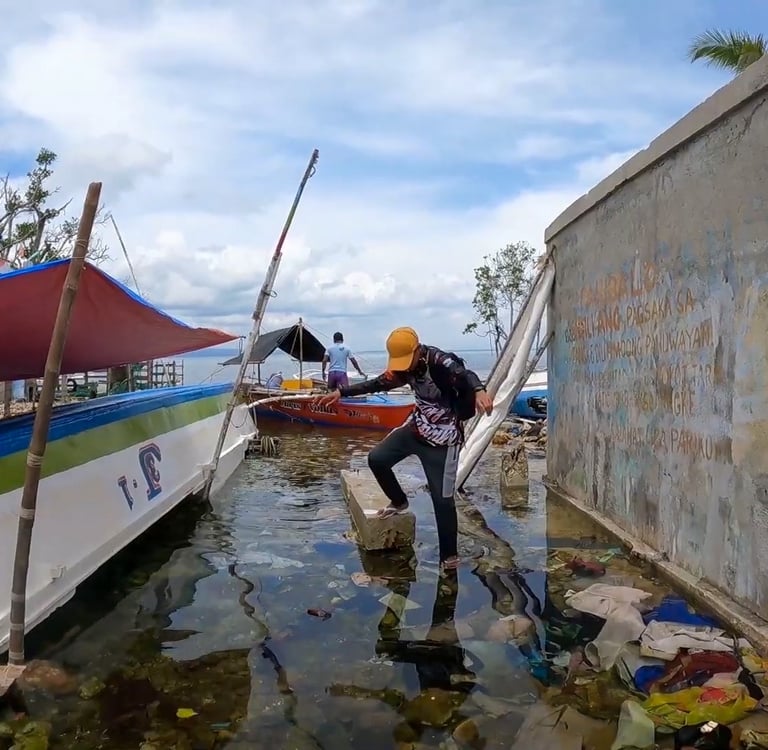
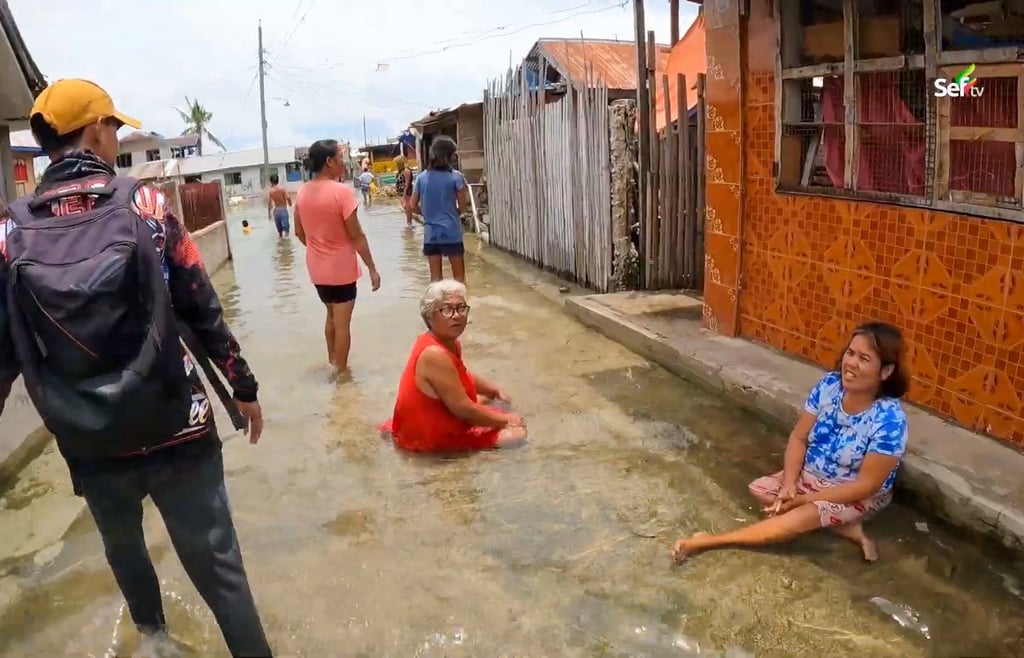
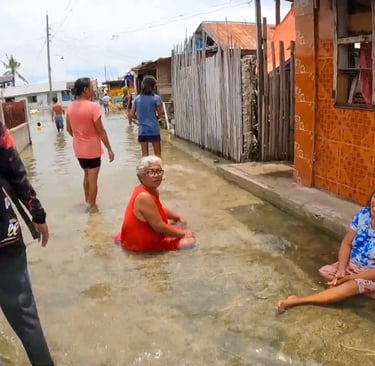
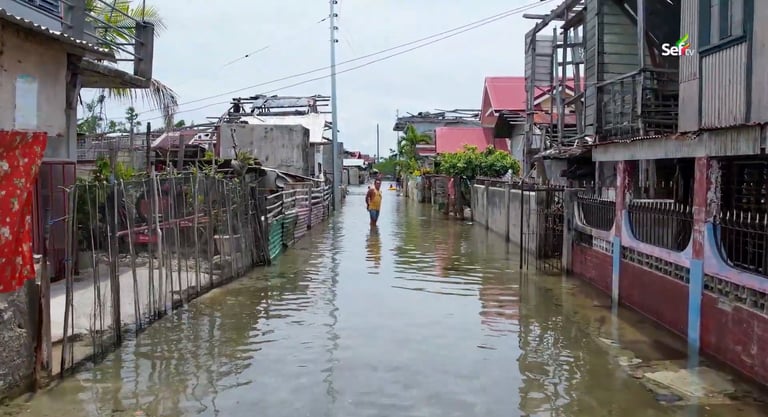
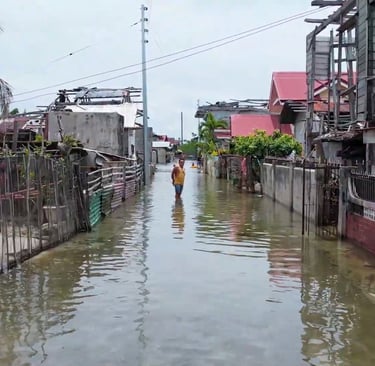
The first thing Joseph saw upon stepping ashore said everything: the island's main road was underwater. It was high tide, and seawater had simply moved in — not as a freak flood, but as a routine event.
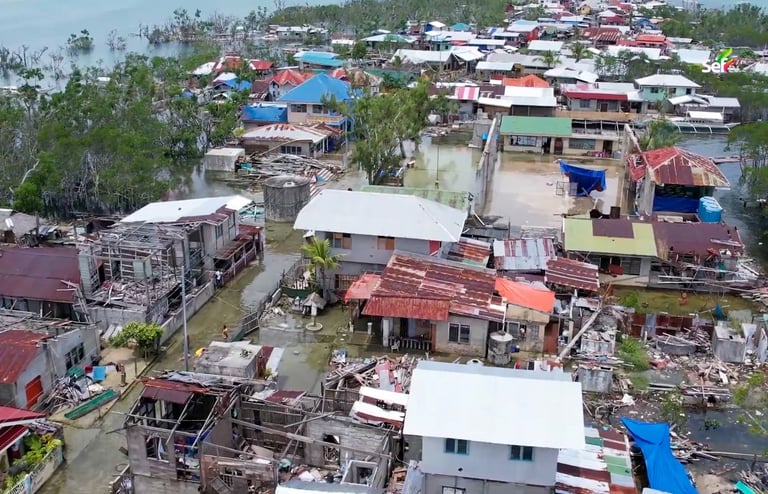
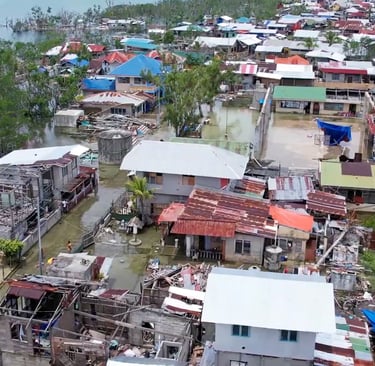
He had visited other low-lying islands in Bohol where the water reaches a few unlucky houses. Batasan was different. Here, most of the houses were standing in the sea. Residents told him that during a full moon, the water climbs even higher than what he was witnessing. One woman, asked whether fish swim through the flooded streets, answered matter-of-factly: sometimes, just little ones.
Walking the island told the rest of the story. Garbage, broken boats, and the debris of destroyed houses mixed together along the shore. Many homes stood abandoned. At the island's far end, only a thin stretch of sand acts as the last barrier between the community and the open sea.
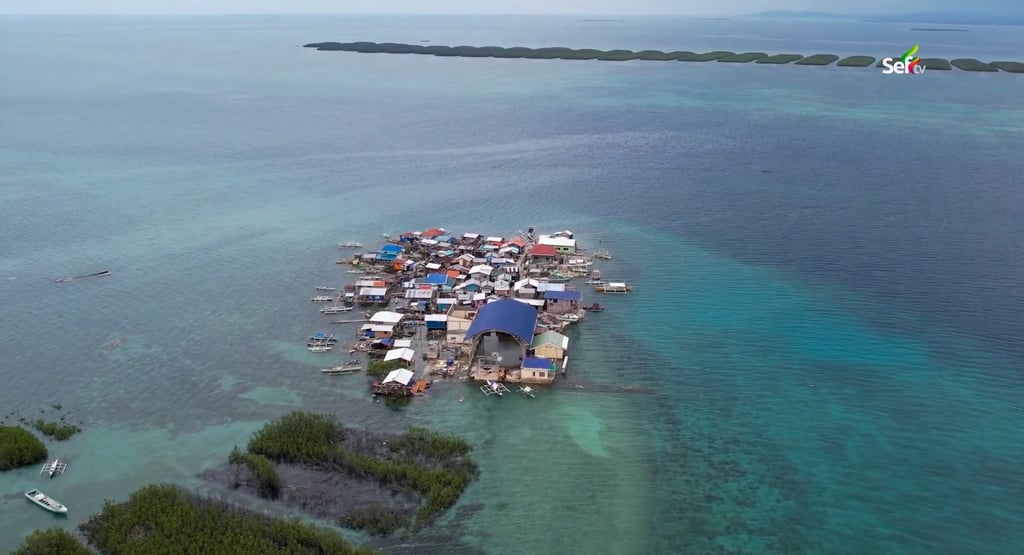
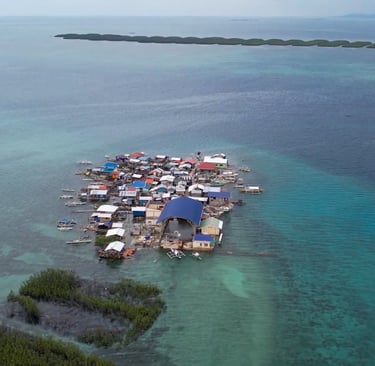
What makes the scene more striking is how crowded Batasan is. Houses are packed tightly together on a sliver of land — a whole barangay, officially under the municipality of Tubigon even though Clarin sits closer, living on an island that the tide visits daily.
Life, Adapted
The first thing Joseph saw upon stepping ashore said everything: the island's main road was underwater. It was high tide, and seawater had simply moved in — not as a freak flood, but as a routine event.
He had visited other low-lying islands in Bohol where the water reaches a few unlucky houses. Batasan was different. Here, most of the houses were standing in the sea. Residents told him that during a full moon, the water climbs even higher than what he was witnessing. One woman, asked whether fish swim through the flooded streets, answered matter-of-factly: sometimes, just little ones.
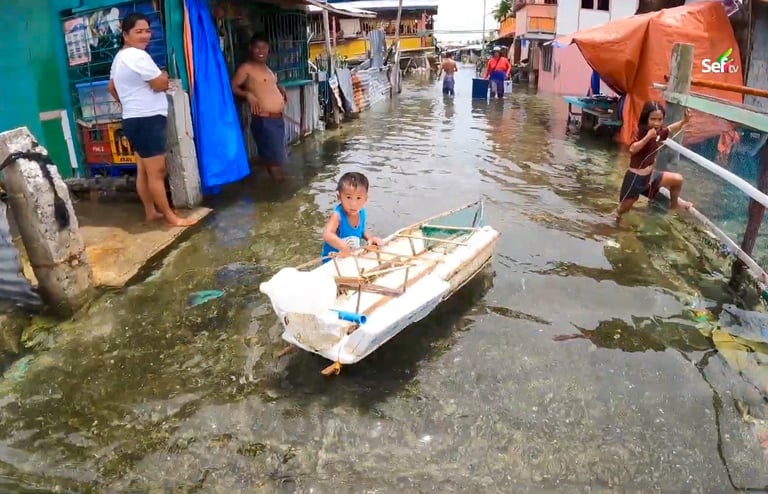
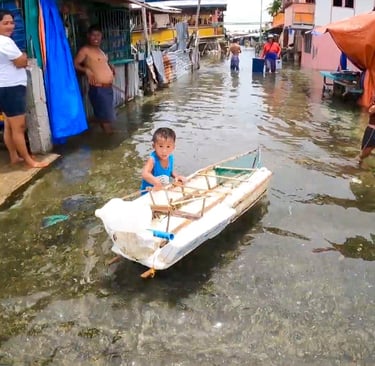
Walking the island told the rest of the story. Garbage, broken boats, and the debris of destroyed houses mixed together along the shore. Many homes stood abandoned. At the island's far end, only a thin stretch of sand acts as the last barrier between the community and the open sea.
What makes the scene more striking is how crowded Batasan is. Houses are packed tightly together on a sliver of land — a whole barangay, officially under the municipality of Tubigon even though Clarin sits closer, living on an island that the tide visits daily.
A Glimpse of Ubay Island
On the way to a mangrove forest behind Batasan, something on nearby Ubay Island caught the crew's eye, and they changed course. Ubay — another small island under Tubigon — showed a different stage of the same story. Its newer, elevated paths stay dry, but the older houses built before the land was raised now sit low against the path, with watermarks showing the sea had once climbed nearly to their second floors. Many remain unrepaired. The island's covered basketball court, sitting beside the primary school, had collected so much water it looked like a swimming pool.
An Island the Next Generation May Never See
Joseph's conclusion was sobering. He once believed that severe flooding was a problem for mainlanders — yet here were entire islands losing the fight against the rising water. Because of the worsening effects of climate change and global warming, Batasan is counted among the sinking islands of the Philippines, places that future generations may only learn about through stories.
For now, the people of Batasan stay, swim, paddle, and adapt — packed together on a crowded strip of land, living each day a little closer to the sea. Their resilience is remarkable. But resilience alone can't hold back the tide, and Batasan Island stands as a vivid, human-scale picture of what rising sea levels mean for the thousands of small island communities across the Philippines.
Loved this story? Share it with others.