
The Man-Made Lagoon Paradise Hidden in Masbate, Philippines
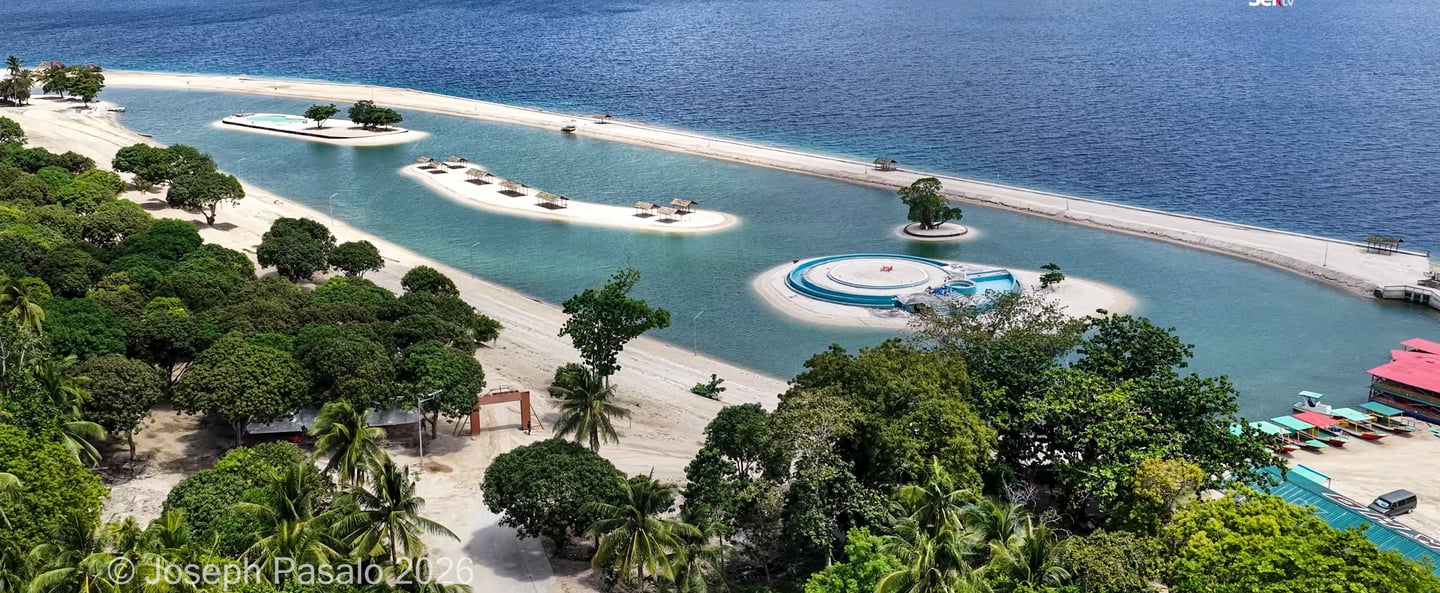
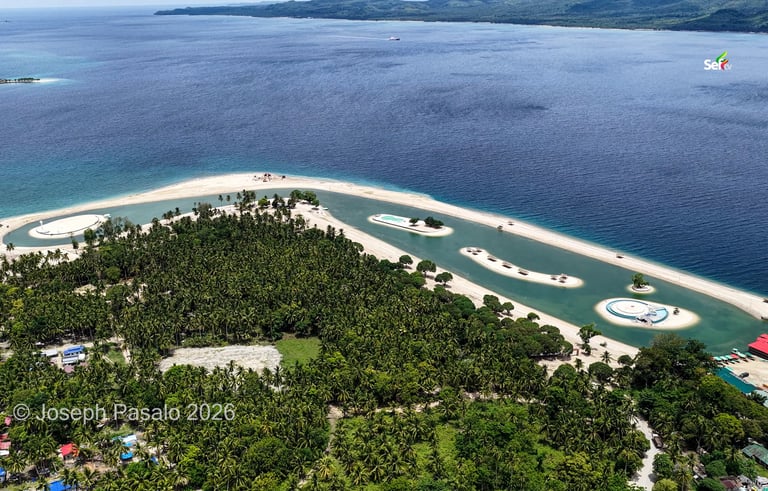
In a quiet village in Cataingan, Masbate, people are building a 7-hectare man-made lagoon — with an infinity pool, island cottages, and lobster you pick alive.
FEATURED STORIES
Joseph P
7/1/20267 min read
The Man-Made Paradise Rising on Masbate's Quiet Coast
By Joseph Pasalo
I have crossed a lot of seas filming this channel, but I did not expect to find a paradise that people built with their own hands at the far edge of a province most travelers skip.
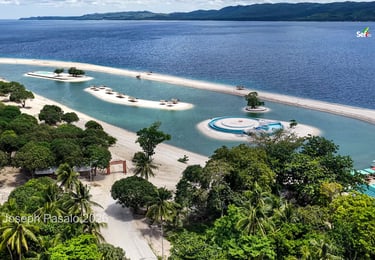
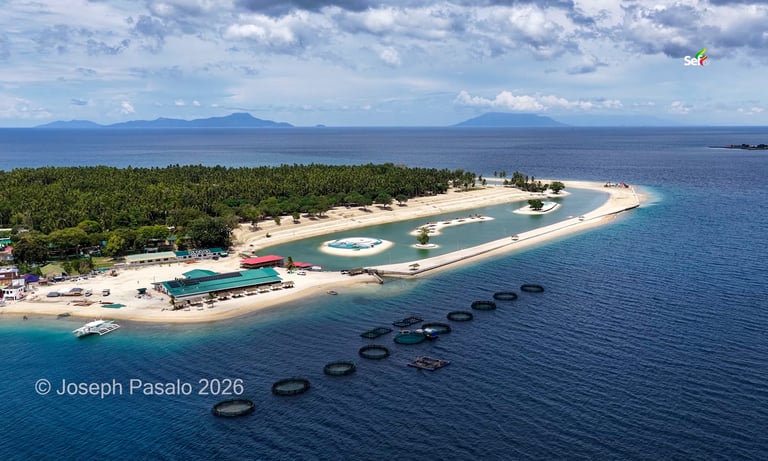
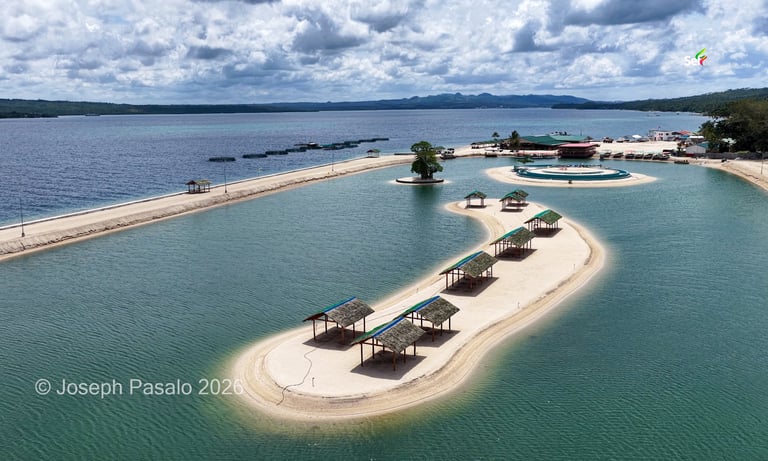
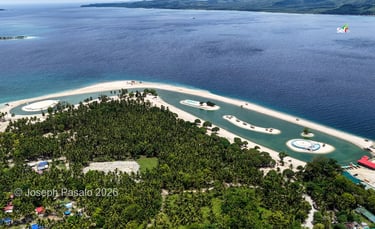
It sits in the village of Matayum, in the town of Cataingan, Masbate. From a distance it looks like the rest of the coastline. Then you reach the far end of the village and the ground opens into water — a sea pool more than seven hectares wide, dug out of the land on purpose, dotted with small islands and the beginnings of cottages, pools, and walkways. They call it a lagoon, but the truth is plainer than that. It is a piece of the sea that people shaped to share.
I will get to the lagoon. But to understand why a place like this feels like a discovery, you have to take the long way in, the same way I did.
Watch the video

Four hours across a calm sea
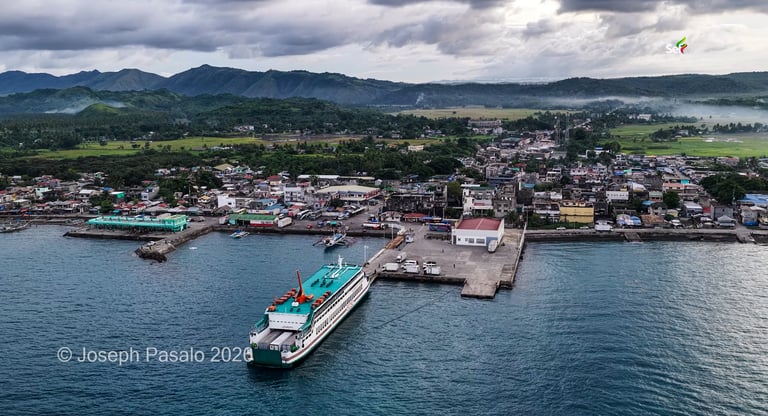
My trip started on the southern tip of Albay, at the port of Pio Duran. Two shipping lines cross from here to Masbate — Sta. Clara and KHO Shipping Lines — and in Masbate, those two names are as familiar as the tide. They are the main ships in and out of the province.
We were checked out of our inn by four in the morning. The loading of vehicles starts that early, and I was not about to miss the ramp with our pick-up truck. The ticketing office for Sta. Clara sat right behind the inn, which made the dark, sleepy walk a short one. We paid a little over three thousand pesos for the truck, tickets for the three of us included.
Even with our tickets in hand, we did not pull away from the dock until six. You wait for the vehicles to load, and then you wait some more. The ship had open decks and an air-conditioned room below, and up on the third deck, plenty of seats and sea air. I asked a crew member whether rough weather stretches out the four-hour trip. He shook his head. The waves here are usually mild, he said, even when it rains. And the weather in Masbate right now? "It's hot."
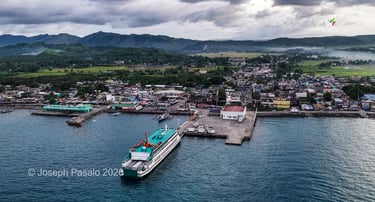
It was past eleven in the morning when we reached the port of Masbate City.
A town with no Jollibee, and a spring everyone shares
From the city we drove an hour and a half south to Cataingan, looking for a bed. I will be honest about something a lot of travel videos leave out: in this part of the province, there is no Jollibee. No fast-food chains at all. So I was glad the hotel we found had a restaurant attached to it. Out here, that counts as a win.
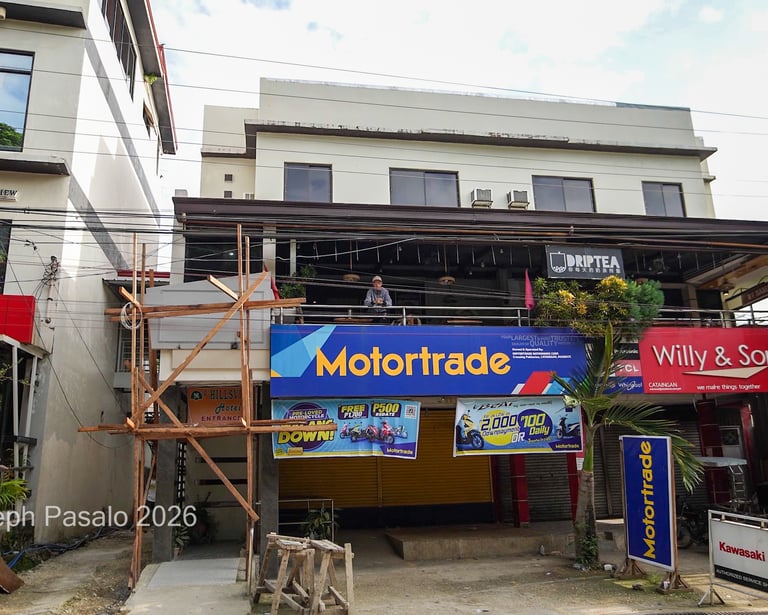
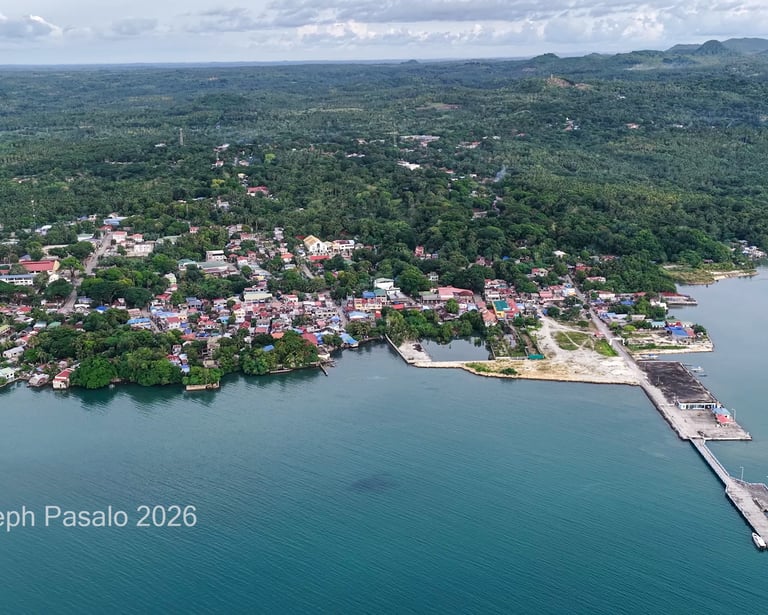
The next morning I noticed something about Masbate that I had not seen anywhere else. Almost every coastal town has its own port. Cataingan has one. So do the barangays under it. On the way to the town's Mintac port, we passed a crowded waterway where neighbors were bathing, washing clothes, and filling containers all at once.
I stopped to ask a woman what the place was. A spring, she told me — water that runs down from the side of the mountain and collects here, at the lowest point of the land, after passing through the grass and the rice fields. It does not stop, she said, not even during the dry weeks of Lent. The water is clean enough to drink, with no chemicals in it, and families who live higher up still come down to carry it home.
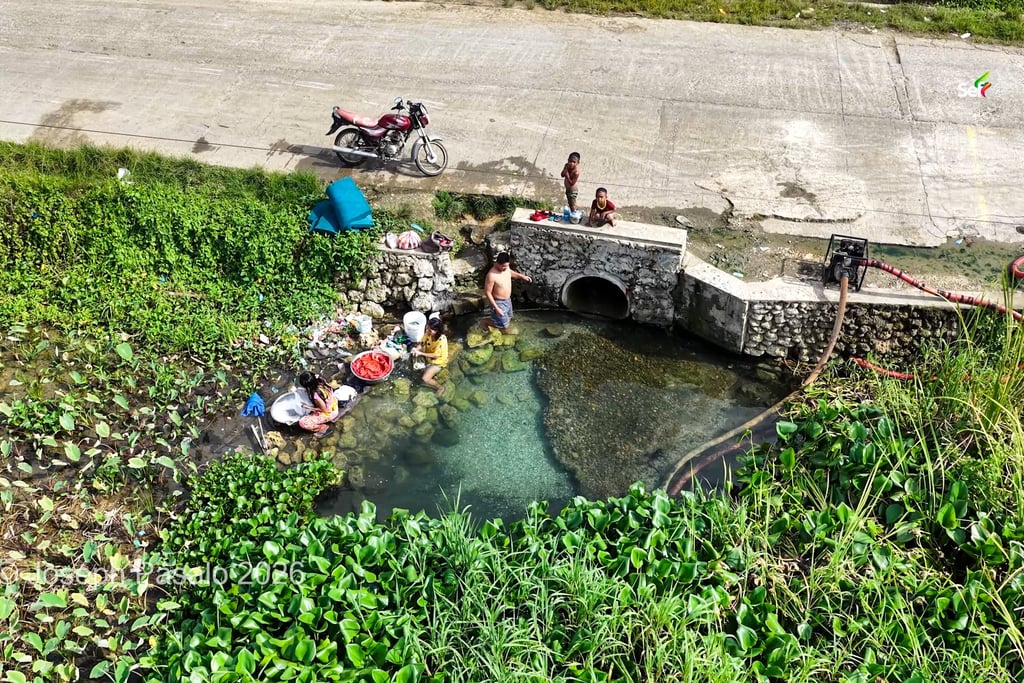
There is even a "no parking" sign painted on that stretch of road. Not for traffic — for the water. The road has to stay clear so people can keep hauling spring water to their houses and to the port. I have filmed beaches and waterfalls all over the country, but a whole community sharing one clean spring was its own kind of beautiful.
A short way ahead, the Mintac port is where passengers board for northern Cebu — the boats now run to the Polambato port in Bogo City. If you ever make this trip, take my advice and bring your own vehicle. The roads here are quiet, the traffic is light, and the scenery stays fresh the whole way. A road trip in Masbate is half the reason to come.
The house carved into a hill
Before crossing back past Cataingan, I made a detour into the remote part of Esperanza, Masbate, to a place I had visited once before and could not stop thinking about.
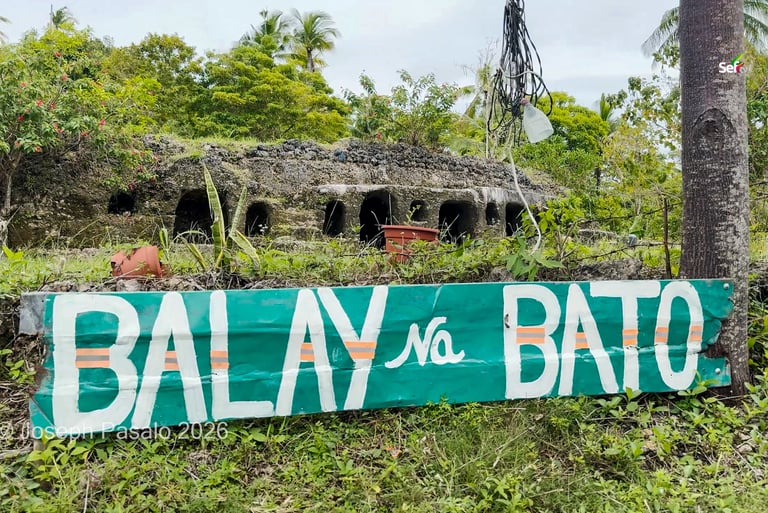
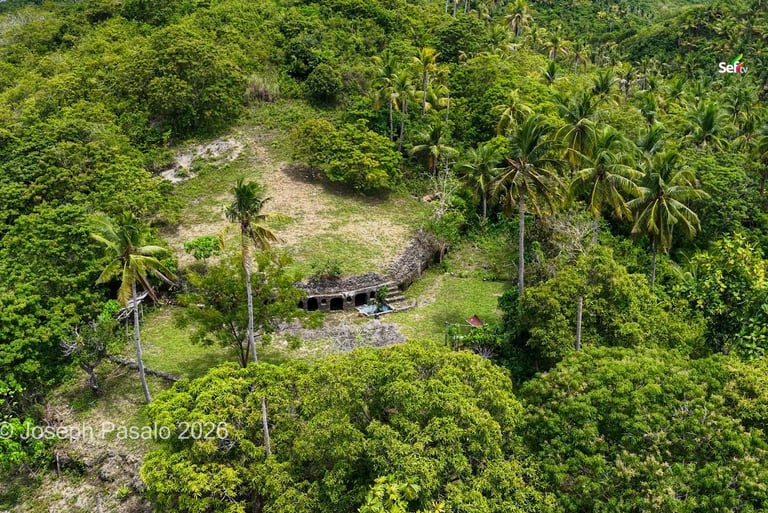
In Barangay Libertad, just steps from the sea, there is a home that locals call the Stone House — Bahay na Bato in Tagalog, or Balay na Bato to the Bisaya families who live around it. The first time I came, no one was here. This time was the same, so we drove a kilometer into the barangay to pick up the caretaker, who agreed to open it for us.
From the road you would never guess a house was there. The top of the hill looks as plain as any other. But walk to the edge and the structure reveals itself, dug and carved straight into the rock. From up here you can see the islands shielded by Cebu, by Samar, Leyte, and Biliran, and on a clear day, even parts of Luzon.
The man who built it was Meliton Santiago, now passed away. Sometime between the 1960s and the 1980s, his family believes, he carved this home out of the rock at the bottom of the hill. He did it because he wanted his family somewhere safe and secure, and because there was no budget for proper materials. So he used simple metal tools and patience, shaping the stone until it matched what he saw in his head. His children were born inside these walls. And when Typhoon Yolanda came through, many neighbors from Libertad sheltered here, inside a hill one man hollowed out by hand.
The paradise people built
By noon I was back in Cataingan and finally standing at the edge of the Matayum lagoon.
The sun was punishing, so we ducked into one of the few buildings open to visitors. We were barely through the door when Sir Roderick, the man in charge of the whole place, came to greet us. Is the lagoon open to the public now, I asked. "Today, we are really open," he said — to anyone, no matter where they come from. The catch is that it is only about half finished. Heavy equipment still sits on the islands, and the shaping and repairs are far from done.
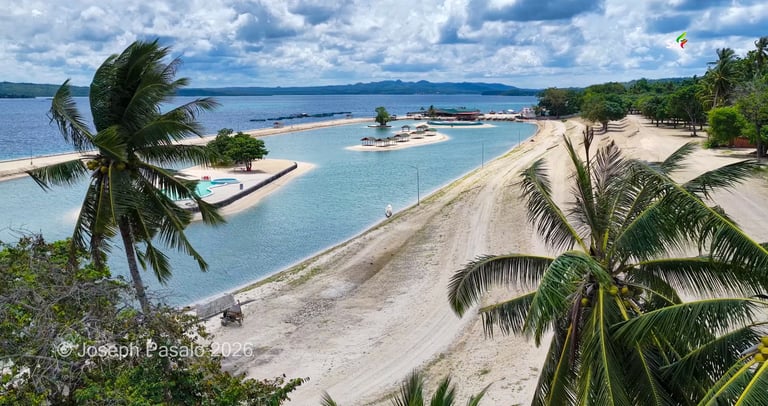
That did not stop Roderick. Even before we really knew each other, he was walking me through everything they have. There is an ATV for eight hundred pesos an hour that takes you around the full ring of the lagoon — close to ten hectares, he says, once it is all developed. There is an infinity pool nearly ready, and a kiddie pool already open at three hundred pesos a head. The cottages sit out on the small islands; if you want one, a flatboat carries you across, and if you order food, they deliver it right to you on the water.
We were not the only ones filming. JM, the most popular vlogger in Masbate, joined us at the lagoon. He is one of the reasons people like me learn what is new and what is hidden in this province. He told me that every year, Masbate celebrates the Bagat-Dagat Festival here, tied to the feast of San Juan on June 24. Last June, he said, the water was full of people.
Choosing your lobster while it is still alive
Seafood by the sea is nothing new. But the restaurant here is proud of one thing: theirs is fresh and still moving.
Guests can get on a boat, motor out to the cages, and pick the exact size of lobster, lapu-lapu, or pitik they want. A man dived in beside us and, in a few seconds, came back up holding a lobster from the cage. It was huge. A tiger lobster, he confirmed — one of the most expensive seafoods in the Philippines. This one weighed about two and a half kilos. The price? Five thousand pesos a kilo, and that is already cooked and on your plate.
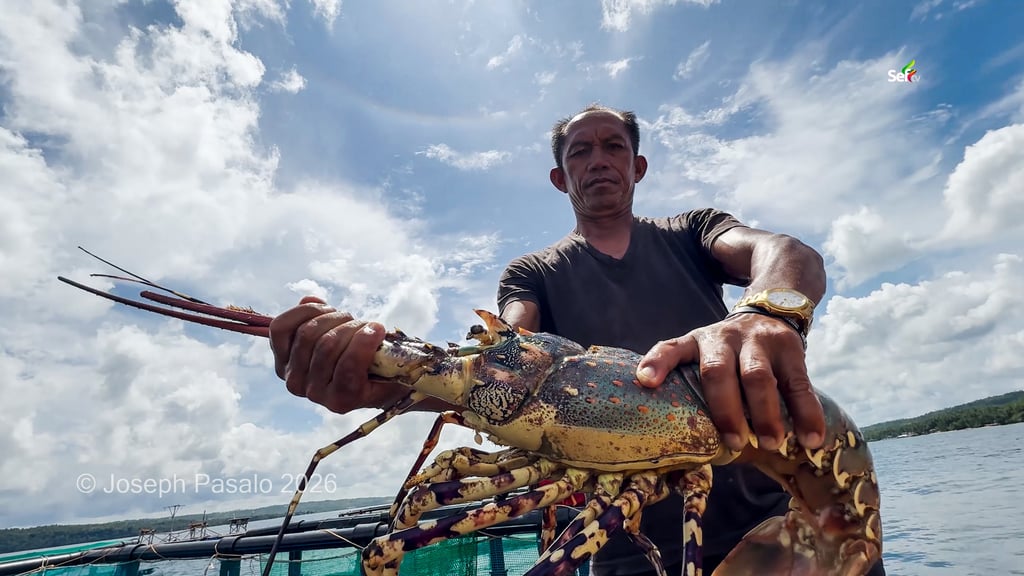
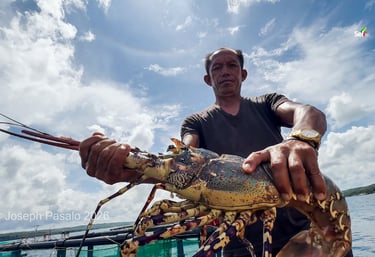
We did not stop at the lobster. We tried a few of their bestsellers too — green soup, lagoon rice, prawn salad, steamed lapu-lapu, and coffee from the little booth inside the restaurant.
A reason to come back
Our schedule was tight. The next leg was another hour and a half to the town of Mobo, then on to the port to cross to Samar. So after we ate, we left — without exploring the whole lagoon.
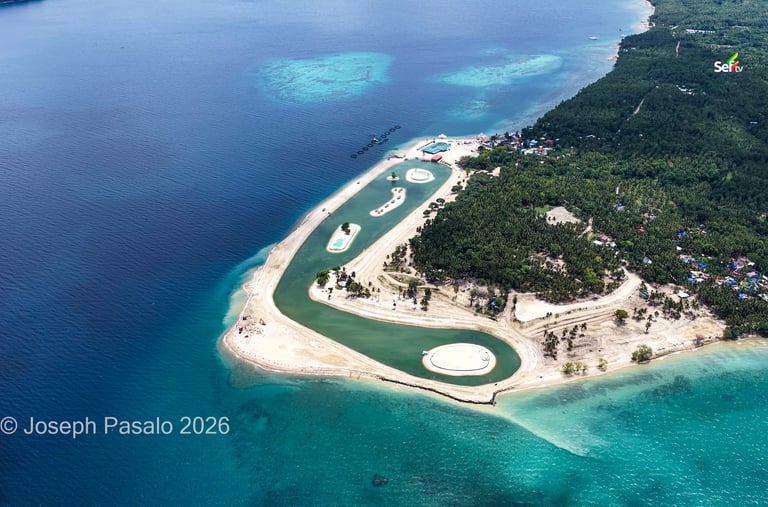
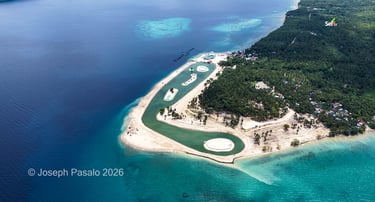
But I saw enough. I saw what this place is becoming. I learned it is already open even while it is half built, and I left genuinely excited to see it finished. That, more than anything, is why I will be back to this part of Masbate. A province people rarely talk about is quietly building a paradise by hand, and I want to be there when it is done.